


Updated June 2026
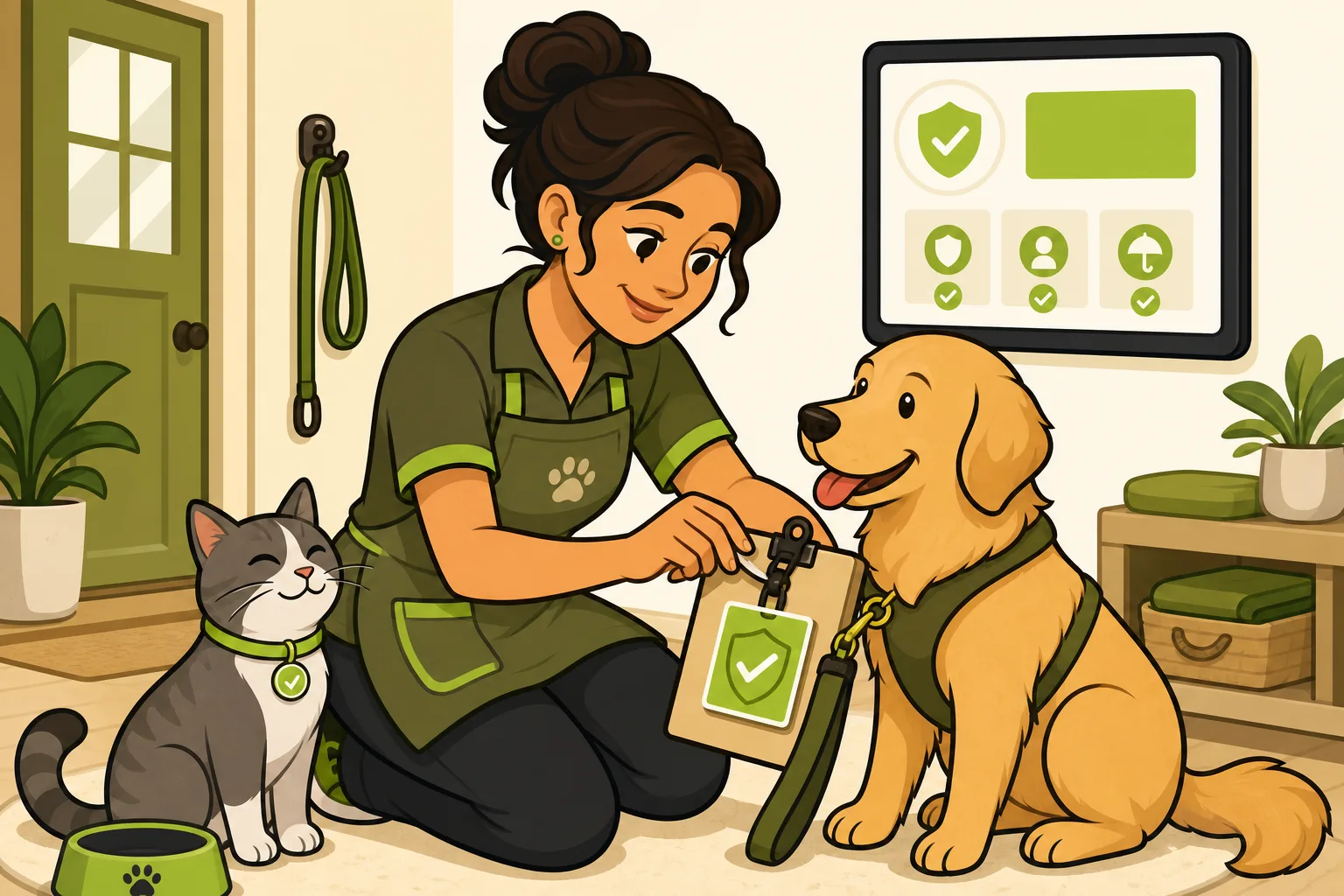
A bonded and insured pet sitter has purchased a fidelity bond (covering theft by the sitter) and general liability insurance (covering accidents, injuries, and property damage while your pet is in their care). Together, these two credentials mean you have financial recourse if something goes wrong — and they signal the sitter is running a legitimate professional business, not a cash-in-hand hobby. Add CPR certification and NAPPS membership, and you have the full credential stack that separates a professional pet sitter from a gig-economy stranger.
This is based on GrowLocal's proprietary research into top-ranking local pet sitter websites.
Below: what each credential covers, how they differ, what to ask any sitter you're evaluating, and — for sitters — why displaying credentials above the fold on your own professional website converts anxious owners into recurring clients far more reliably than a buried Rover profile.
What does "bonded" actually mean for a pet sitter?
Bonding refers to a fidelity bond, also called a dishonesty bond or employee dishonesty coverage. If the sitter (or any employee or contractor they bring into your home) steals from you, the bond pays compensation — typically covering cash, jewelry, electronics, or other valuables.
A few things pet owners should understand:
- Conviction is usually required. Most fidelity bonds pay out only after the responsible person is found criminally guilty. The bond is more of a deterrent and a reimbursement mechanism than instant compensation.
- Bonding is most meaningful for businesses with employees or subcontractors. A solo owner-operator sitter who never enters your home unsupervised carries lower theft risk than a company that sends different staff each visit.
- Bonding is not the same as insurance. A bond covers intentional wrongdoing (theft, fraud). Insurance covers accidents.
The presence of a bond tells you the sitter has been vetted enough for a bonding company to accept them — and that they care enough about their professional reputation to carry the coverage.
What does "insured" mean for a pet sitter?
Pet sitter insurance is general liability coverage. It's broader and more practically relevant than bonding for most everyday situations. A policy typically covers:
- Injury to your pet while under the sitter's care (veterinary costs if the sitter's negligence caused harm)
- Third-party bodily injury — for example, your dog bites a neighbor during a walk; the sitter's policy responds
- Property damage — a visit goes sideways and something in your home is broken
- Lost key replacement — most professional policies include this; losing your house key is expensive and stressful
The two main providers you'll see on pet sitter websites are Pet Sitters Associates (PSA) and Business Insurers of the Carolinas, which insures NAPPS members. Either is a legitimate, purpose-built policy for this industry.
What is the difference between bonded and insured?
| Credential | What it covers | When it applies |
|---|---|---|
| Bonded | Theft or fraud by the sitter/employees | If valuables go missing after a visit |
| Insured (general liability) | Accidents, injuries, property damage, lost keys | If your pet is hurt, property is damaged, or someone is injured during care |
| Both together | Financial protection across both intentional and accidental harm | Standard professional baseline — require both |
Most professional pet sitters carry both. A sitter who only mentions one of the two is worth asking about the other.
What is CPR certification for a pet sitter?
Pet CPR and First Aid certification trains a sitter to respond to genuine emergencies: choking, cardiac arrest, severe wounds, seizures, and other situations where the difference between "sitter called us" and "sitter acted immediately" can determine whether your pet survives.
Across our research into professional pet sitting websites, CPR and First Aid certification is the second most common trust credential on display — appearing on every site that ranked above basic Rover-adjacent listings. The first is bonded-and-insured status.
Common certifications:
- American Red Cross Pet First Aid: ~$25, widely accepted
- Pet Tech PetSaver: $60–$100, more comprehensive hands-on curriculum
Neither credential is government-regulated — but both signal a sitter who has made a tangible investment in being prepared for emergencies rather than just hoping nothing goes wrong.
What is NAPPS certification and why does it matter?
NAPPS — the National Association of Professional Pet Sitters — is the only national nonprofit professional association dedicated to pet sitters. The Certified Professional Pet Sitter (CPPS) designation requires completing a self-paced course, passing an exam (75% or better), and recertifying every three years via 30 hours of continuing education. Cost is $245 for NAPPS members, $395 for non-members.
The curriculum covers pet care, nutrition, behavior, health, pet safety, and business development. For pet owners, NAPPS membership is a shorthand signal: this person has invested in formal education, belongs to a professional community with standards, and is accountable to an organization that can revoke their standing.
Key takeaway: Across GrowLocal's proprietary research into top-ranking local pet sitter websites, bonded and insured status appeared on every professional site analyzed — usually displayed as a logo badge near the primary CTA, before pricing or service details. CPR certification was the second most common credential. The sitters with the strongest conversion rates led with credentials, not photos, not pricing.
How do I verify a pet sitter's credentials?
Don't take a sitter's word for it — ask for documentation:
- Insurance: Request a certificate of insurance (COI). A legitimate insurer issues one on request; Pet Sitters Associates and Business Insurers of the Carolinas both verify member policies.
- Bonding: Ask to see the bond certificate with the sitter's business name and current expiration date.
- CPR/First Aid: Ask to see the certification card. American Red Cross cards expire after two years.
- NAPPS: Search the member directory at petsitters.org to confirm current status.
A professional sitter will have these ready. Hesitation is a signal.
For pet sitters: why displaying credentials on your own website beats a Rover profile
Here's what most credential articles miss: the how and where of display matters as much as having the credentials.
On Rover or Wag, your credentials live in a profile section below reviews, below pricing, below photos — wherever the platform's algorithm puts them. You don't control the layout. An anxious owner has to hunt to find them.
On your own professional website, you control the badge row. The strongest professional pet sitter sites place the credential row — bonded + insured + CPR certified + NAPPS member — above the fold, before the first service card, before pricing. It's the first thing a visitor sees after the headline.
This matters because of how pet owners actually decide. Across our research, pet owners evaluating in-home sitters are primarily assessing trustworthiness before price — the decision to hand over house keys drives days to weeks of research. A badge row above the fold short-circuits that research. It signals: credential verification has already been done.
The conversion sequence on a well-built pet sitter site:
1. Visitor lands → headline + geo + credential badges (trust established in seconds)
2. Scrolls to services → confirms the right visit type is available
3. Reads testimonials → social proof reinforces the trust badges
4. Hits "Request a Free Meet & Greet" → the soft conversion that starts the real relationship
Across our research into professional pet sitting websites, the primary conversion action is a free Meet & Greet — not an immediate booking. The badge row makes a stranger feel safe enough to request that meeting.
A note on client portals: many established pet sitters use Time To Pet or PetSitConnect for real-time GPS tracking and mid-visit photo updates. Those tools are retention features for existing clients. A professional website handles the step that comes first: converting a new visitor into a first-time client. See our pet sitting websites page for what that looks like.
Frequently Asked Questions About Pet Sitter Credentials
Does a pet sitter need to be bonded?
Bonding is not legally required in most states, but it is the professional standard. A sitter without a fidelity bond is asking you to trust that no one in their operation will take anything from your home — without any financial backstop if they do. For any sitter who enters your home without you present, bonding is a reasonable baseline requirement.
Is there a certification for pet sitters?
Yes. The most recognized is the Certified Professional Pet Sitter (CPPS) designation from NAPPS (National Association of Professional Pet Sitters). It requires formal coursework, a passing exam score, and recertification every three years. Pet CPR and First Aid certification from the American Red Cross or Pet Tech is a separate, complementary credential that most professional sitters also carry.
How do I know if a pet sitter's insurance is real?
Ask for a certificate of insurance (COI). A legitimate pet sitter with active coverage can have their insurer issue one on request — it names the policy, coverage limits, effective dates, and the insured business. If a sitter says they're insured but can't produce a COI, treat that claim as unverified.
What credentials should appear on a pet sitter's website?
Across GrowLocal's proprietary research into top-ranking pet sitter websites, the credential badge row that converts best combines four elements: bonded, insured, CPR/First Aid certified, and NAPPS member — displayed prominently above the fold before pricing or service details. The order matters: bonded + insured address the financial-protection fear first; CPR certification addresses the emergency-response fear; NAPPS membership signals ongoing professional commitment.
Can I find a bonded and insured pet sitter near me?
Search the NAPPS member directory at petsitters.org to find verified members in your area. You can also browse professional pet sitter websites where independent sitters display their full credential stack on their own site — rather than buried in a platform profile.
Do I need a professional website if I already have a Rover profile?
If you're a pet sitter building a business you intend to keep, yes. A Rover profile shows credentials only where Rover decides to show them. Your own website lets you lead with credentials, display your testimonials, publish a service menu, and capture quote requests directly — see what a professional pet sitting website includes. For the financial math on the 20% Rover commission, see Pet Sitter vs. Rover: The Math on Owning Your Pipeline.
What is the Meet & Greet and how do credentials affect it?
The Meet & Greet is the in-person introductory meeting professional sitters use to onboard new clients before first service. Across our research into professional pet sitting websites, every analyzed professional sitter offered this as the primary conversion step. A credential badge row on the website does the initial trust work so a visitor is willing to request the meeting. Explore the full range of professional local business websites at growlocal.site/websites-for.