


Updated June 2026
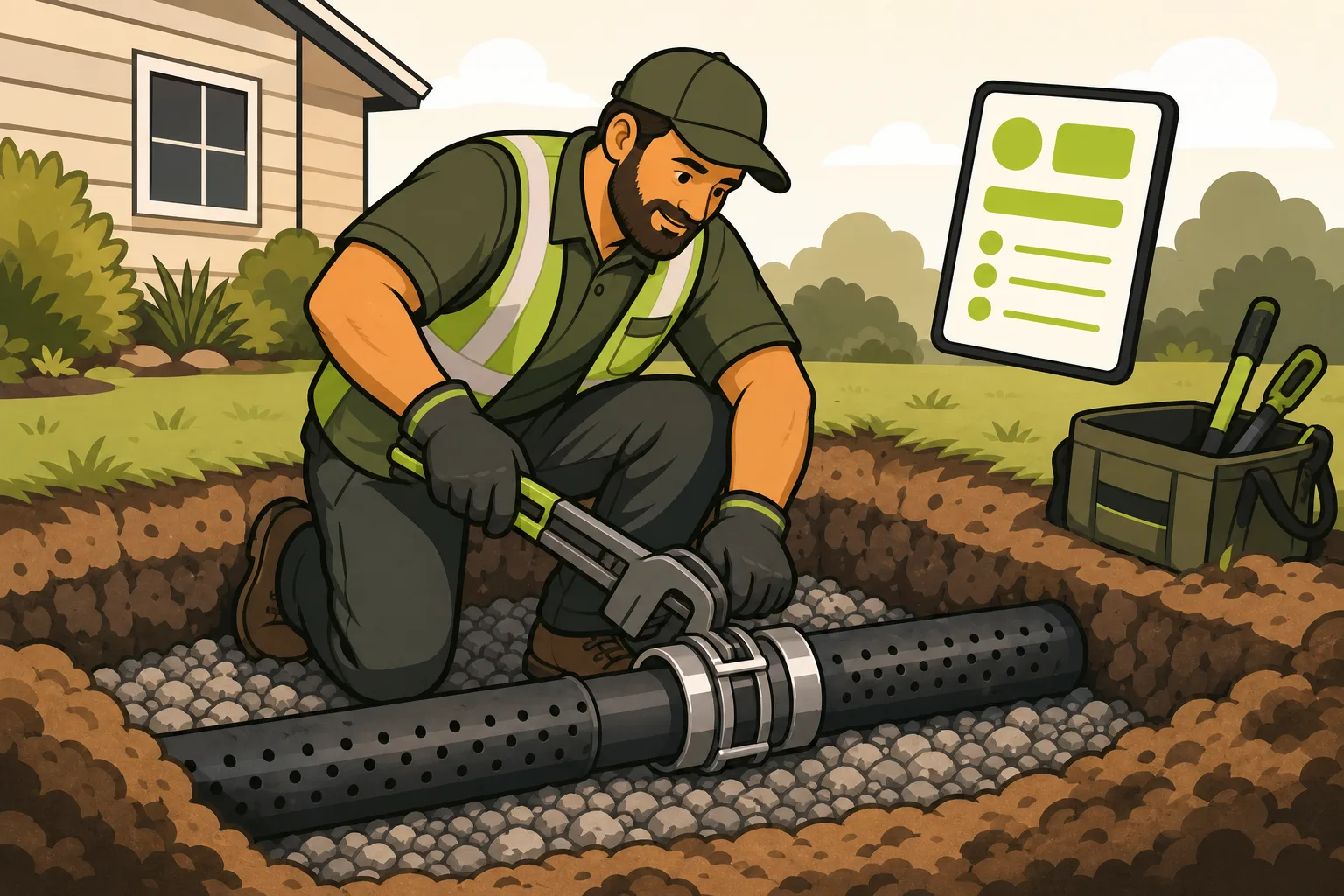
Drain field repair typically costs $1,000–$5,000 for targeted fixes like jetting or aeration, and $5,000–$20,000 or more for full replacement. Whether you repair or replace depends on system age, the extent of soil saturation, and whether pipes and chambers are physically damaged. A licensed septic contractor's on-site diagnosis is the only reliable way to know which path you need.
Based on GrowLocal's proprietary research into top-ranking local business websites and publicly cited cost data from Angi and HomeGuide (2026).
Below: the warning signs homeowners miss, a repair-versus-replace decision guide, how much each option costs, and — for septic company owners — why a dedicated drain field page is the highest-ROI addition you can make to your website.
What are the signs of a failing drain field?
A drain field fails when soil around the buried pipes can no longer absorb and treat wastewater fast enough. Catch these signals early and you may be able to repair; miss them and you're likely looking at full replacement.
Warning signs to watch for:
- Soggy or spongy ground above the drain field, even in dry weather
- Unusually lush, green grass growing directly over septic lines (effluent is fertilizing it)
- Sewage odor outdoors near the drain field or indoors near drains
- Slow drains throughout the house — not isolated to one fixture
- Sewage backup into lowest-level fixtures (floor drains, basement toilets)
- Gurgling sounds when flushing or draining
Any one of these warrants a call to a septic contractor. Multiple signs together mean the system needs immediate inspection.
What causes drain field problems?
Most drain field failures come down to one of four causes:
- Sludge overflow from the tank. When a septic tank isn't pumped on the recommended 3-to-5-year schedule, solids overflow into the drain lines and clog them. This is the most preventable cause.
- Soil saturation. Extended heavy rain, high water tables, or excessive household water use can oversaturate the soil before it can absorb effluent.
- Root intrusion. Tree and shrub roots seek out moisture and can crush or infiltrate drain field pipes over years.
- Compacted soil. Driving or parking vehicles over the drain field crushes the gravel matrix and pipe walls, cutting off the soil's drainage capacity.
System age matters too. Most drain fields are engineered for 20–30 years of service. An older system showing multiple failure signs may be beyond cost-effective repair.
Can a drain field be repaired, or does it need replacement?
Often it can be repaired — especially when caught before complete saturation. Use this guide to understand your options:
| Situation | Likely path | Estimated cost |
|---|---|---|
| Clogged pipes, early saturation | Jetting or aeration | $1,000–$3,000 |
| Moderate soil failure, intact pipes | Aeration + bio-remediation | $2,000–$5,000 |
| Distribution box cracked or damaged | Box replacement | $500–$1,500 |
| Full soil saturation, collapsed pipes | Partial or full replacement | $5,000–$15,000 |
| Complete system failure, no repair area | Full replacement + permits | $10,000–$20,000+ |
The most important question your contractor should answer is: are the pipes and distribution box physically damaged, or is this a soil failure? Most drain field failures are soil failures — the pipes are fine, but the surrounding ground can no longer process effluent. Soil failures are often treatable. Structural pipe damage or complete saturation usually means replacement.
If a contractor recommends full replacement without first confirming pipe damage, ask for the specific finding that rules out repair.
How much does drain field repair cost?
Costs depend on the repair method, system size, soil conditions, and local permit requirements. Based on current contractor data:
- Jetting (high-pressure pipe clearing): $500–$1,500
- Aeration (loosening compacted soil): $1,000–$3,000
- Bio-remediation products + service visit: $500–$2,000
- Distribution box replacement: $500–$1,500
- Partial drain field replacement (one lateral): $3,000–$7,000
- Full drain field replacement: $5,000–$15,000 conventional; $10,000–$20,000+ mound system
- Permits and soil testing: $500–$3,000 (required in most counties before replacement)
Most counties require a licensed contractor for any drain field repair or replacement — not just permits, but the actual work. Verify your contractor holds the appropriate state certification for on-site wastewater systems.
Why most septic websites undersell drain field repair — and what to do about it
Drain field repair and replacement is the highest-ticket service in the septic business. A single job runs $3,000 to $20,000 or more. Yet across GrowLocal's proprietary research into top-ranking septic company websites, most sites give drain field services a single line in a bulleted service list — no dedicated page, no FAQ, no before/after photos.
That's the gap. The homeowner searching "drain field repair" is panicked, making a large financial decision, and scanning multiple sites before calling anyone. What they need to see before they pick up the phone:
- A dedicated drain field service page that explains your repair options (not just a bullet point)
- Before/after photos of completed drain field jobs — this is the proof that you've done this work before. Before/after photography is among the highest-converting content across transformation trades, yet most septic sites skip it entirely, based on our research into competitor site patterns.
- A clear FAQ covering repair vs. replace, cost ranges, and the diagnostic process
- A quote form with a short response-time promise (a 24-hour callback commitment converts these anxious buyers well)
- Your licensing and state wastewater certifications prominently displayed — TCEQ, TOWA, BBB, or your state equivalent. The homeowner spending $15,000 on a drain field needs to know you're credentialed.
One note on trust signals: across our research into top-ranking septic company sites, none displayed an explicit service guarantee — making a written workmanship guarantee a real differentiator for companies willing to commit to one. For a $10,000+ job, a guarantee converts hesitant buyers.
See the full septic services website breakdown at GrowLocal → for the complete list of what top-performing septic sites include.
Key takeaway: Across GrowLocal's proprietary research, all six analyzed top-ranking septic services competitors hide pricing entirely — and none display an explicit service guarantee. For drain field leads (your highest-ticket jobs), that means your conversion edge is a dedicated page, before/after gallery, and a free-quote form with a clear response promise — not a price list and not vague trust claims.
What does a drain field service page actually need?
A dedicated drain field page on your septic website should cover:
- The service itself — what drain field repair and replacement means, in plain language
- Warning signs — help homeowners self-identify before they panic-call a competitor
- Your repair methods — jetting, aeration, bio-remediation, partial replacement: list what you offer
- Honest cost context — you don't need a price list, but a range ("most repairs run $1,000–$5,000; major replacements $10,000–$20,000") sets realistic expectations and reduces tire-kicker calls
- Your diagnostic process — "we start with a camera inspection before recommending any repair" signals expertise
- Before/after photos — real job-site photos of drain field work outperform any trust copy
- Your credentials — state license number, certifications, years in service
- A prominent quote/contact form — with a clear response time
For a quote form, GrowLocal builds one into every septic site — homeowners fill it out, you get the lead, you call back. That's the right flow for a service where the diagnosis requires a site visit anyway.
The same approach works across home-services trades — our local business website hub → shows how plumbing, HVAC, and other contractors structure high-ticket service pages, and the conversion patterns for drain field repair are nearly identical to plumbing emergency service pages →.
For a full audit of what your septic site should include, the septic services website checklist → covers every page, section, and trust signal a competing site needs. For the related question of how customers price-shop pumping calls before they call anyone, see what customers Google before calling a septic company →.
Frequently Asked Questions About Drain Field Repair
Can a drain field be repaired without digging up the yard?
Yes, in many cases. Techniques like high-pressure jetting, aeration, and bio-remediation can restore function without major excavation. If pipes are intact and the problem is soil compaction or early saturation, you may only need a service visit and treatment — not shovels. Your contractor should assess pipe condition before recommending any excavation.
How long does a repaired drain field last?
A properly repaired drain field — where the root cause was addressed, not just the symptoms — can provide another 5–15 years of service. Results vary with system age, soil type, household water use habits, and whether regular pumping resumes. Systems that are 20+ years old and have already failed once are stronger candidates for full replacement.
What's the difference between drain field repair and drain field replacement?
Repair addresses a specific problem within an existing system — clearing a clogged pipe, replacing a cracked distribution box, or treating saturated soil. Replacement means excavating the old drain field and installing a new one in a different area of the property (or a different system type, like a mound system, if soil conditions require it). Replacement costs 3–10x more and requires permits; repair is faster, less disruptive, and the right starting point when damage is contained.
Do I need a permit for drain field repair?
Permit requirements vary by state and county. Many jurisdictions require permits for any work beyond routine pumping — including repairs, not just replacements. A licensed contractor handles permitting as part of the job. Confirm your contractor is licensed for on-site wastewater work in your state before signing anything.
How do I know if a septic company is qualified to repair a drain field?
Look for your state's on-site wastewater or septic contractor license — in Texas it's TCEQ-issued, in many states it's a separate license from the general plumbing license. Ask for the license number and verify it online. BBB accreditation and state association membership (TOWA in Texas) are additional credibility markers. Across our research into top-ranking septic company sites, the most trusted operators prominently display their specific certifications — not just "licensed and insured."
Does GrowLocal build websites for septic companies?
Yes — a GrowLocal website for septic services → includes a drain field service page, photo gallery for before/after work, FAQ section, quote/contact form, and mobile-fast static hosting. We don't offer live Google Reviews integration or online booking (for scheduling, most septic companies use a direct phone call or a third-party tool), but the core site is built to convert the research buyers who spend the most.