
Updated June 2026
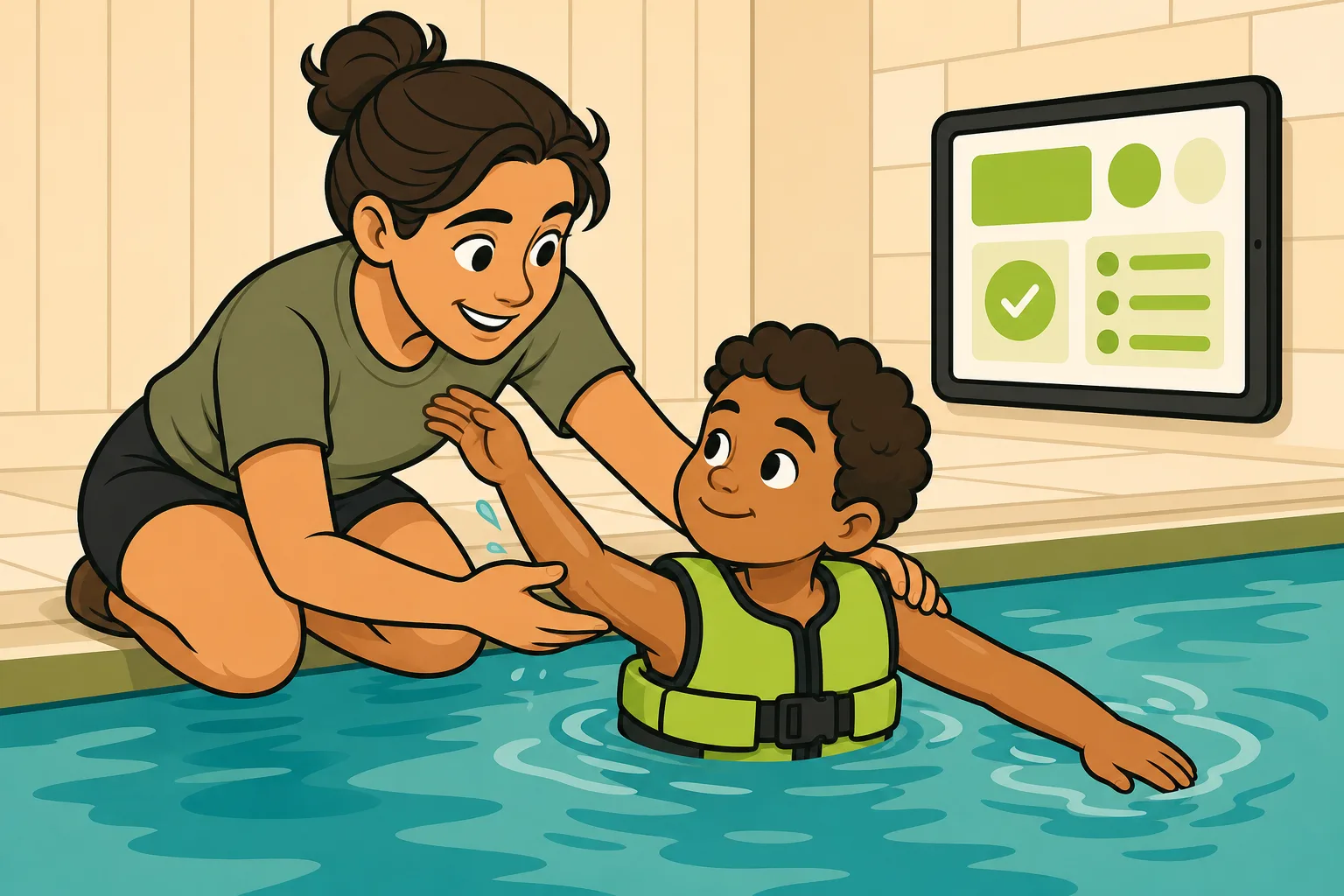
Adaptive swim lessons are one-on-one or small-group aquatic instruction designed for children and adults with autism, ADHD, sensory processing differences, Down syndrome, cerebral palsy, and other physical or cognitive disabilities. For independent swim schools, they represent the fastest-growing, least-served enrollment segment in the market — and the swim school owner who adds adaptive programming and displays it clearly on their website captures families that a generic "programs" page will never reach.
This is based on GrowLocal's proprietary research into top-ranking independent swim school websites across Austin, Denver, and Nashville.
Why Does Adaptive Programming Matter for Independent Swim Schools?
The demand is urgent and underserved. Children with autism are 160 times more likely to drown than neurotypical peers, according to the Autism Society of America. In 2024, at least 69 children with autism drowned in the United States — nearly double the annual average — prompting a national alert from the National Autism Association in September 2024. Drowning is the leading cause of death for autistic children, driven by wandering, water fascination, and limited danger awareness.
That urgency translates directly into parent search behavior. Parents of autistic and special-needs children are actively looking for swim schools that can serve their child — and most of them find nothing in their area. A dedicated adaptive program, clearly named and explained on your website, puts your school in front of a motivated, underserved group of families.
From a business standpoint: adaptive families enroll intentionally, not seasonally. Retention rates are higher. Referral networks within special-needs parent communities — school groups, therapy Facebook groups, pediatric OT offices — move fast once your school is known.
What Credentials Do Instructors Need for Adaptive Swim Lessons?
Standard Water Safety Instructor (WSI) certification from the American Red Cross is the prerequisite — every adaptive instructor must first be a certified swim instructor. On top of that base, two credentials are widely recognized and worth displaying on your website:
| Credential | Provider | Format | What It Covers |
|---|---|---|---|
| Swim Whisperers® Certification | Swim Angelfish | Online, multi-level | 14 common adaptive roadblocks, 11 areas of focus, sensory and behavioral strategies; video, case studies, practicum |
| Adaptive Swim Instructor Certification | Nurturing Water Therapies | Online (~45-60 min per module) | Neurodiverse clients, water safety, stroke technique for adaptive learners |
| ARC Water Safety Instructor | American Red Cross | In-person | Base credential — required before adaptive specialization |
Swim Angelfish's Swim Whisperers® is the most widely cited credential across independent adaptive programs. It signals to parents that your instructor has specific training — not just good intentions — and it's the credential parents of autistic children are most likely to recognize and ask about.
Displaying credentials matters as much as holding them. Across GrowLocal's proprietary research into top-ranking independent swim school websites, the highest-converting sites display at least one nationally recognized credential badge — USSSA, ARC, ISR, or Swim Angelfish — above or directly adjacent to the primary enrollment CTA. For an adaptive program, the credential badge belongs on the adaptive service page, not buried in an About section a parent may never reach.
Why Does Your Adaptive Program Need Its Own Service Page?
A dedicated adaptive service page captures parents a generic "Programs" page will never convert. Parents of special-needs children are not browsing — they search for something specific. They type "adaptive swim lessons [city]" and land with a precise question. If the answer is buried three clicks into a programs menu, they leave.
A standalone adaptive service page:
- Matches the search intent directly. Google's title link for your page can read "Adaptive Swim Lessons — [Your School Name]" — which is what the parent typed.
- Carries the full answer above the fold. Instructor credential, program description, what to expect in a first lesson, and a contact form — all visible before the parent scrolls.
- Removes the barrier of self-identification. Parents of special-needs children are accustomed to programs that "accommodate" but aren't built for their child. A dedicated page signals your program is intentional, not an afterthought.
The conversion action is an inquiry form, not online booking. Adaptive placements require a phone conversation first — instructors need the child's sensory profile before the first session. "Request a Call" or "Tell Us About Your Swimmer" works better than "Enroll Now." GrowLocal's contact form handles this — pair it with the instructor's credential listed above the form button.
See our full swim school website breakdown at GrowLocal for how to structure the adaptive service page alongside your general programs.
Key Takeaway
Children with autism are 160 times more likely to drown than neurotypical peers (Autism Society of America). That statistic makes adaptive swim programming a safety mission — and it makes your Swim Angelfish credential the single most important trust signal on your adaptive service page. In GrowLocal's proprietary research into top-ranking independent swim school websites, credential badge display above the enrollment CTA is the differentiating trust pattern among the highest-converting sites.
What Should the FAQ on Your Adaptive Service Page Answer?
Parents of autistic or special-needs children have specific anxiety points that are different from your general enrollment FAQ. If your website doesn't answer these questions, parents call a school that does — or give up entirely.
The adaptive FAQ needs to address:
- "Has your instructor worked with a child like mine?" Name the credential, describe the kinds of needs your instructor has experience with.
- "What happens if my child has a meltdown in the water?" This is the question parents most fear asking. Answer it plainly — your protocol, how the instructor de-escalates, that the session can stop at any time without judgment.
- "How long before my child is water safe?" Never promise a timeline. Describe what the first three to five sessions typically look like.
- "Can I watch the lesson?" State your observation policy clearly — for autistic children, the answer affects enrollment more than pricing.
This pre-answering turns a cold web search into a phone call. The swim school website checklist covers the credential display and FAQ structure alongside the full set of trust elements that drive enrollment.
What Does a Winning Adaptive Swim Program Page Look Like?
Here is the anatomy of a high-converting adaptive service page for an independent swim school:
- Page headline: Adaptive Swim Lessons — [City Name] (matches the search + adds local SEO)
- First paragraph (above the fold): Who the program serves, what makes it different, the instructor's credential — 3 sentences max
- Credential badge: Swim Angelfish Swim Whisperer® or ARC logo, visible above the inquiry form
- What to expect: 3-4 bullet points describing the first session experience
- FAQ block: 5-6 questions drawn from the list above — written in plain language, not clinical terms
- Inquiry form: "Tell Us About Your Swimmer" — name, age, primary need, preferred contact method
- Testimonial (if available): One sentence from an adaptive family — even a first name and child's age is enough; do not invent one
This is a GrowLocal-buildable page. Every element — service page, FAQ, testimonials, contact form, gallery — is a feature the platform supports. The booking workflow is handled offline (a call, then enrollment); the website's job is to make that call happen. Note that live online scheduling for adaptive placements is handled by dedicated swim school management platforms like Jackrabbit or iClassPro, not a static website builder — and for this program type, most schools prefer the intake call before any scheduling anyway.
Not every parent searches "adaptive swim lessons." Many type "swim lessons for autistic kids," "sensory-friendly swim lessons," or "swim school for kids with ADHD." Include these naturally in your page copy. See how local businesses across the GrowLocal platform handle specialized program language.
Explore the full swim school website features at GrowLocal to see how an adaptive service page fits into a complete swim school site.
For more on how ISR certification — another credential-heavy program — is displayed and explained on swim school websites, see ISR swim lessons: what every swim school owner needs to know.
Frequently Asked Questions About Adaptive Swim Lessons
What are adaptive swim lessons?
Adaptive swim lessons are one-on-one or small-group aquatic instruction customized for children and adults with autism, ADHD, sensory processing differences, Down syndrome, cerebral palsy, and other cognitive or physical disabilities. The curriculum, pacing, environment, and instructor communication style are all adjusted to meet the individual swimmer's needs — unlike standard group lessons that assume a uniform learning path.
What instructor certifications are needed to offer adaptive swim lessons?
Instructors need a base Water Safety Instructor (WSI) or equivalent certification first. On top of that, the most recognized adaptive credential is the Swim Whisperers® certification from Swim Angelfish — a multi-level online program covering sensory and behavioral strategies specific to special-needs aquatic instruction. Nurturing Water Therapies also offers an online adaptive certification that takes approximately two to three hours to complete.
How do I add an adaptive program to my swim school's website?
Create a dedicated adaptive service page — not a sub-section of your general programs page. The page should name the credential your instructor holds, describe who the program serves, explain what the first lesson looks like, and include a contact form with a "Tell Us About Your Swimmer" framing. Display the Swim Angelfish or ARC credential badge visibly above the form. Across GrowLocal's proprietary research into top-ranking independent swim school websites, credential display above the enrollment CTA is the single most consistent differentiator among the highest-converting sites (see our full data on swim school website conversion patterns).
Can children with autism really learn to swim?
Yes. Research published in peer-reviewed aquatics literature shows that even a five-day adapted swim program significantly improves water safety skills in children with autism. Many Swim Angelfish-certified schools report that autistic children often make faster-than-expected progress once the sensory environment is right and the instructor communicates in ways that match the child's learning style. The goal of adaptive lessons is water safety and confidence, not competitive swimming.
Do I need a website to market adaptive swim lessons?
A website with a dedicated adaptive service page is the primary way parents find adaptive programs in their area — most do not know to look for a specific school by name. They search "adaptive swim lessons [city]" and click the first result that clearly explains the program. Without a dedicated page, your school is invisible to this search. A GrowLocal swim school website includes service pages, FAQ sections, and contact forms — the three elements an adaptive program page needs to convert a searcher into a phone call.