


Social Media Marketing for Funeral Homes: What Actually Works
Updated June 2026
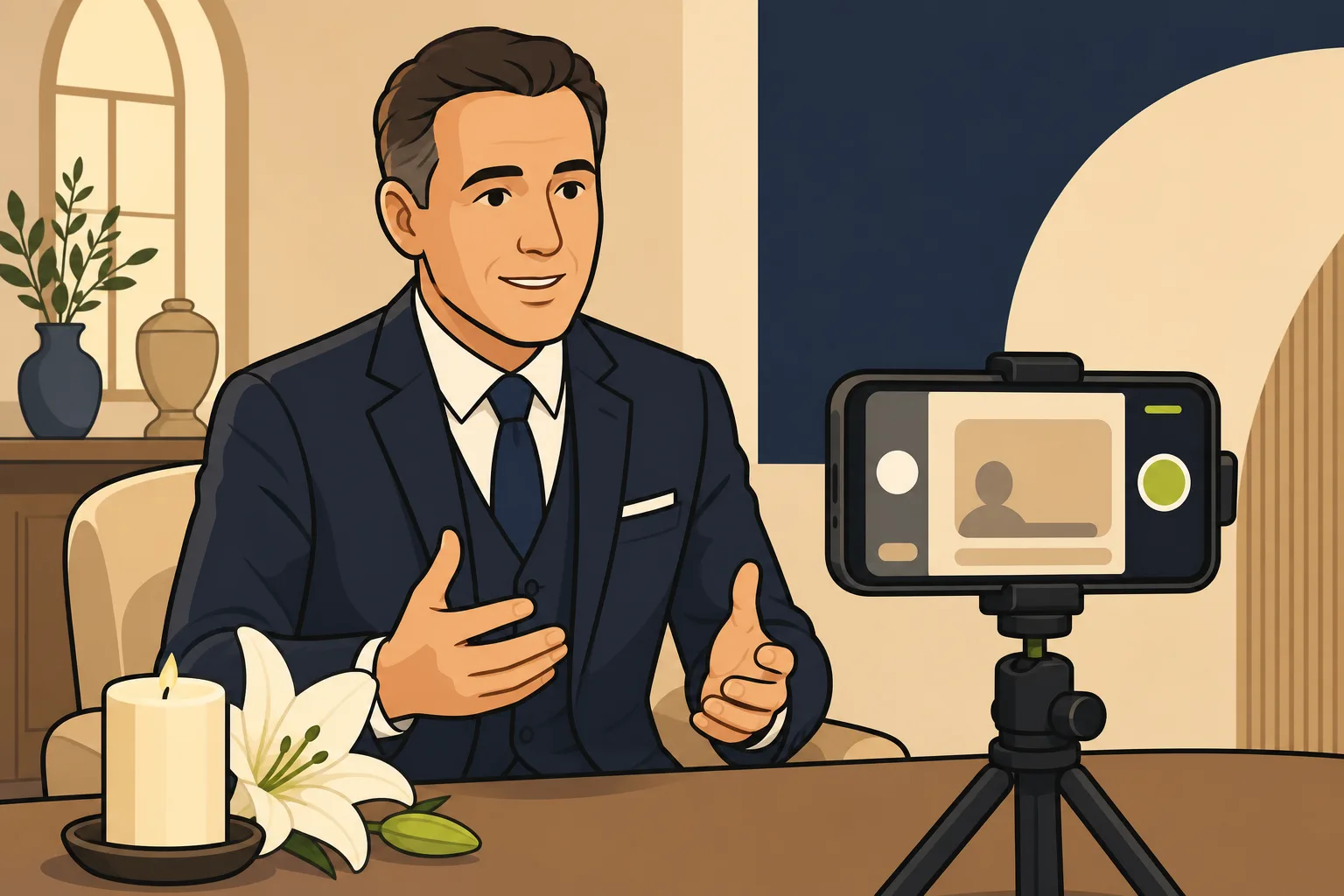
For a funeral home, the social content that works is education that breaks the death silence — a calm, warm funeral director answering the taboo questions families are afraid to ask, like what really happens during cremation or what to do in the first hour after a death at home. Not discounts. Not ASMR. Not embalming-room shock clips. The proven format is a single director facing the camera with honest, plain-spoken answers, paired with grief-support posts and community remembrance moments. Get those three veins right and you build the trust that drives the eventual call.
That sounds simple. Doing it well, every week, while running a funeral home, is the hard part. This guide walks through the exact content veins that travel for this trade, the realistic cadence and platform mix, and the honest tradeoff of keeping it going.
What kind of content actually works for a funeral home?
The winning genre is education-as-entertainment that makes death less taboo — answering the questions people quietly wonder about but feel they can't ask. This is the vein behind every funeral director who has built a real following. One Ohio funeral director went viral and earned national news coverage doing exactly this: warm, honest videos that demystify the profession. The "DeathTok" morticians who broke through built audiences by bringing transparency to a field most people fear.
For a small-town, family-owned home, this is not about gore or shock. It is about being the trusted local face who tells the truth gently. Five veins carry this trade:
- Myth-bust / FAQ — one curious question per post, answered calmly.
- Grief support — hopeful, shareable coping and remembrance content.
- Recurring-character host series — the same director people come back for.
- Behind-the-scenes — humanizing the team and demystifying the space.
- Community — vigils, veterans honors, local remembrance events.
Key takeaway: For funeral homes, honesty is the algorithm. The content that travels answers a question families were too afraid to ask — never a question about price.
What should a funeral director actually post?
Start with the myth-bust / FAQ vein — it is the proven viral lane for this trade. Pick one real question and answer it warmly on camera. Hooks that work name the unspoken fear directly:
- "The question everyone's too afraid to ask a funeral director…"
- "No, you don't actually have to do that — let me explain."
- "Here's exactly what happens in the first hour after someone dies at home."
The structure is the same every time: open facing camera and name the question, answer plainly in a beat or two, reassure ("there's no wrong question, and you're not alone in wondering"), then invite the next question in the comments. No sell, ever. On Instagram, the same vein becomes a saveable carousel — "Cremation vs. burial, explained plainly" or "What to do in the first 24 hours after a loved one dies." People save those and come back to them when they need them.
The grief-support vein is your share engine. A soft image with a hopeful, validating truth — "Grief doesn't move in a straight line, and that's okay" — gets shared by people thinking of someone they lost. Keep it hopeful, not morbid: most of your followers aren't actively grieving, and the feed should feel like a candle, not a cloud. On Facebook, the highest-shared version is practical: "How to support a friend who's grieving when you don't know what to say." That post gets forwarded.
The recurring-character host series is what turns viewers into followers. One funeral home built a following with a recurring urn-showcase series — same director, familiar format, a little dignified personality, a tease for next time. People return for the host, not the topic. A weekly "ask a funeral director" segment does the same thing: it anchors your calendar and trains the audience to come back.
Two more round out the mix. Behind-the-scenes counters the "dark, dreary place" fear by showing real staff and the care that happens before a family ever arrives — the family-owned angle is your differentiator against corporate chains. Community posts — candlelight vigils, veterans honors, local fundraisers — show your roots and earn goodwill no ad can buy.
Can a funeral home use trending audio without being tone-deaf?
Yes, but the gentleness guardrail is everything. Trend participation works only when the subject stays dignified. One funeral home used a trending runway-walk audio to showcase an urn from its showroom — borrowed reach, respectful execution. The rule: borrow the format, never mock the topic. Showcase a keepsake, a peaceful garden, or honor a veteran. Never put jokey trending audio on a grief topic.
This is the line that separates a local family home from a shock account. Hard "don'ts" for this trade:
- No discounts, "book now," urgency, or any sale framing on grief content.
- No graphic, clinical, or embalming-room imagery; no decedents or caskets.
- No stock photos of strangers crying — it reads as exploitative.
- No identifiable service, family, or obituary without explicit written consent.
- Stay FTC Funeral Rule compliant — never imply a service is required when it isn't.
How often should a funeral home post, and on which platforms?
Two to four posts a week is the sustainable, appropriate cadence — consistency matters far more than volume, and daily posting can read as insensitive. A recurring weekly series (a Friday "ask a funeral director" question) anchors the calendar; Stories can run more casually for community moments.
Platform mix is driven by who's deciding. The same care you put into the feed should extend to the home base every post points back to — your website is where a grieving family confirms you're real, and in our analysis of top-ranking local business sites, 92% of local business websites hide pricing entirely (N=237 sites, 28 categories), funneling visitors to a call. For a funeral home that's defensible, but a clear "transparent pricing" pledge and a simple contact form still convert anxious visitors. See our funeral home website breakdown for what families look for first.
| Platform | Role | Best veins |
|---|---|---|
| Primary — older decision-makers, obituary sharing, condolences | Grief support, community, pre-planning | |
| Instagram / TikTok | Reach & awareness — death-positive education, younger pre-planners | Myth-bust, host series, BTS, gentle trends |
| Google Business Profile | Local discovery & reviews | Service updates, hours, community posts |
A realistic monthly mix is roughly 30% myth-bust education, 20% grief support, 15% community, 10% behind-the-scenes, 10% host series, 10% gentle pre-planning, and a small slice of respectful trend participation. The one "promotional" lane that fits this category is pre-planning framed as an act of love — never a sale.
Is this worth the effort for a funeral home?
Honestly: the content works, but it is a real weekly job. Scripting myth-bust answers, filming a calm talking-head, designing saveable carousels, capturing community events with consent, and staying dignified across every post — that's hours a week, every week, in a profession where your actual job is caring for grieving families. Most homes start strong and fade by month two. The death-positive directors who broke through treat it like a second role.
That's the gap GrowLocal closes. We build and host your funeral home's website, then write your social posts for you — grounded in your trade and your brand, in the warm, dignified voice this category demands. We already know the funeral-home veins that travel: the honest FAQ answer, the hopeful grief-support card, the community remembrance recap. You stay focused on families; the steady, respectful presence keeps showing up. Compare how we build sites for local businesses across trades, or start with your own funeral home site and done-for-you social.
If you want the trust that drives the call without the weekly content grind, that's the payoff — a presence that's consistent, kind, and unmistakably yours.
Common Questions About Funeral Home Social Media
What's the best platform for a funeral home?
Facebook is the primary platform because immediate-need and pre-planning decision-makers skew older, and it's where obituaries get shared and condolences happen. Use Instagram and TikTok for reach and the death-positive education content that draws younger pre-planners. Keep a Google Business Profile current for local discovery and reviews.
How often should a funeral home post on social media?
Two to four posts per week is sustainable and appropriate — consistency beats volume, and daily posting can feel insensitive for this category. Anchor the calendar with one recurring weekly series, like a Friday "ask a funeral director" question, and use Stories more casually for community moments.
Is it disrespectful to use trending TikTok content as a funeral home?
No, as long as the subject stays dignified. Borrow a trending format to showcase a keepsake, a peaceful space, or honor a veteran — never to joke about death or loss. The gentleness guardrail is what separates a trusted local home from a shock account.
What should a funeral home never post on social media?
Never post discounts, "book now" urgency, graphic or clinical imagery, images of decedents or caskets, or any identifiable service or family without explicit written consent. Avoid stock photos of strangers crying, which read as exploitative. Stay FTC Funeral Rule compliant by never implying a service is required when it isn't.
Do I need a website if I'm already active on social media?
Yes. Social builds awareness and trust, but a grieving family almost always confirms you on your website before calling — and in our analysis of top-ranking local business sites, 92% hide pricing, making a simple contact form and a clear "transparent pricing" pledge a real differentiator. Your social posts should always point back to a fast, calm site you control.
Can I just have someone write my funeral home's social posts for me?
Yes — that's exactly what GrowLocal's done-for-you social does. We write posts grounded in the funeral-home content veins that work, in the dignified voice this category requires, so you stay focused on families. See our funeral home website and social breakdown to start.