


Social Media Marketing for Musicians: What Actually Works in 2026
Updated June 2026
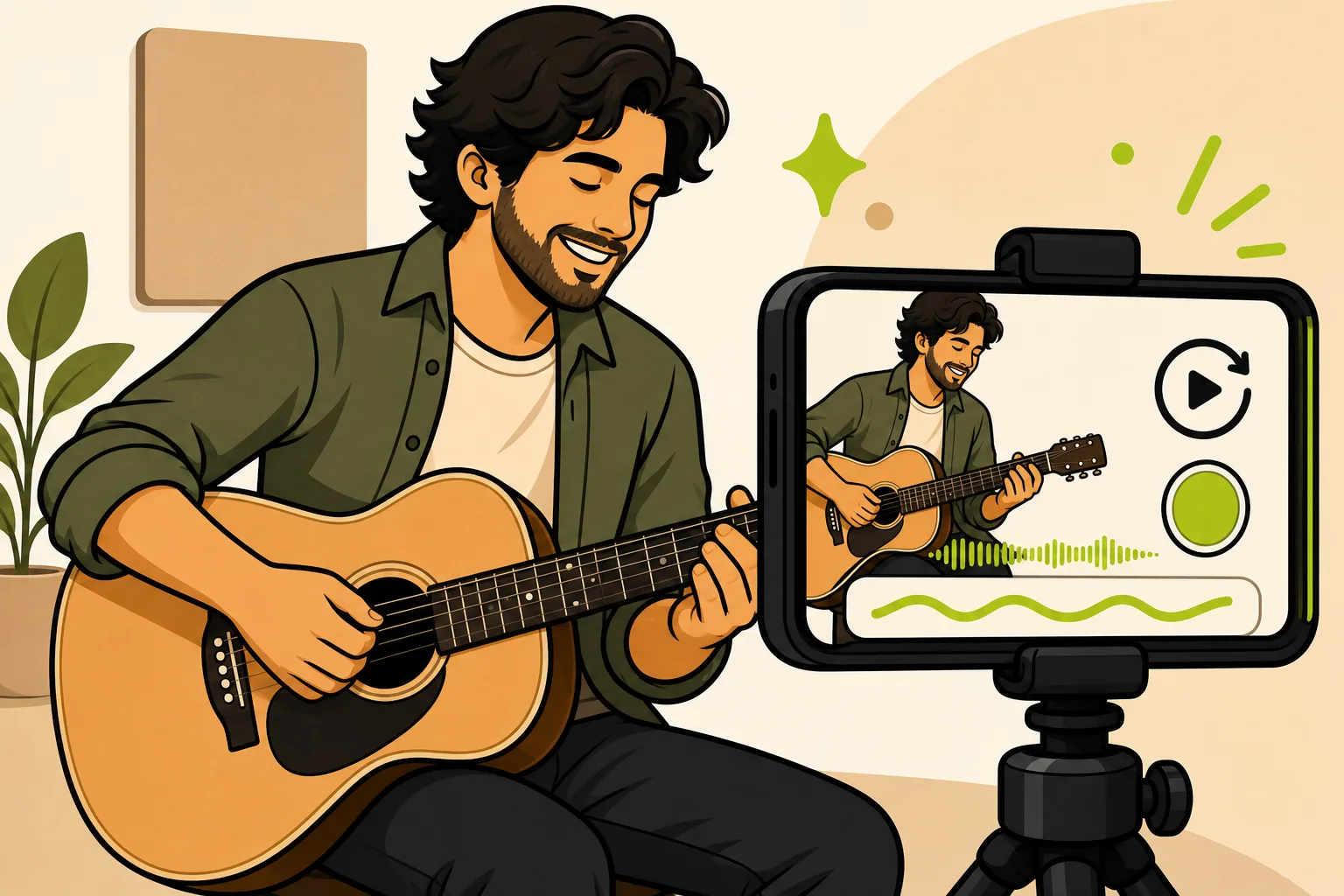
Social media marketing for musicians works when the song itself is the content, not an ad for it. The five formats that actually grow an independent artist are: the 15-second loopable hook clip, the storytime behind a lyric, band-life humor, studio behind-the-scenes, and remixing a trending sound. Release announcements and merch drops ride on top of that audience — they should be a minority of your feed, never the engine. Per TikTok and Luminate's 2025 Music Impact Report, 84% of songs that entered the Billboard Global 200 went viral on TikTok first — discovery now starts with a clip, not a press release.
Below is what each of those formats looks like in practice, how often to post, and the honest tradeoff: doing this well is roughly three to five videos a week, every week, forever.
What kind of content actually grows a musician's following?
The content that grows musicians is the music itself cut into watchable, loopable moments — plus the human behind it. Posting "stream now" links does not grow a following. Five trade-specific veins do the work.
The 15-second hook clip (your most-used format)
Your song is the satisfying content. Cut the single most addictive 15-20 seconds — the line that lives in your head rent-free — and put one striking lyric on screen as text. Hold the frame on you or the instrument so it loops cleanly, and end on a beat that makes the loop seamless. No call to action; the loop is the point. Short wins decisively here: a 15-second clip at 90% retention beats a 60-second clip at 30%. This is the highest-frequency vein and the actual discovery driver.
The storytime behind a lyric
The backstory converts strangers into followers far better than a bare clip. Open on your face, talking to camera: "the lyric I was scared to release," or "I wrote this after a breakup I didn't think I'd survive." Tell the real story in one or two sentences, then drop into the 10-15 seconds of song underneath it. Context before audio. Over 60% of the best-performing music Reels lead with an emotional hook (Pitch-US, 2025) — the feeling is what gets saved and shared.
Band-life humor
Musician memes are a huge native genre and almost pure follower-growth, because comments and shares signal the algorithm. The reliable bits: the wrong note live, a string snapping mid-set, the impossible task of scheduling rehearsal, drummer and bandmate stereotypes, "expectation vs. reality" of writing a song. Set up the relatable moment in the first two seconds, play it out, land the punchline, no sell.
Studio and songwriting behind-the-scenes
Process content reliably out-reaches the finished song on profile visits, because fans want to see how it's made. Open mid-process — a beat building, a vocal take, a part getting layered — show the trial and error, then reveal the finished snippet as payoff. The "it works now" moment is the hook.
Riding a trending sound
About a fifth of a healthy feed is trends. Take a currently-trending audio or format and run it through your own identity — your song, your instrument, your personality. Open on the recognizable format in the first second, land the trend's beat on time, end on its natural punch. You're borrowing the trend's reach, not making an ad.
Key takeaway: With 84% of Billboard Global 200 entries going viral on TikTok first (TikTok / Luminate, 2025), the clip is the new single. Build your feed around hook clips, lyric storytimes, and band-life moments — keep "stream now" posts under a fifth of what you publish.
Should musicians post the song or talk about themselves?
Both, in a deliberate mix — and neither alone. All-music feeds bore people; all-personality feeds make fans forget you make music. The widely-cited 70-20-10 musician rule (70% music and process, 20% trends, 10% personal) is the right shape, with one adjustment: promotional posts stay a minority.
A realistic weekly mix for an independent artist:
| Content vein | Share of feed | Example post |
|---|---|---|
| Song-snippet / hook clips | ~25% | 15s of the chorus, one lyric on screen, loops clean |
| Lyric storytime / backstory | ~20% | "the line I almost cut" → into the clip |
| Band-life humor | ~15% | "POV: the drummer is late again" |
| Studio / songwriting BTS | ~10% | a beat coming together, the take that finally felt right |
| Trend participation | ~10% | a trending sound, your genre's spin |
| Day-in-the-life / band dynamics | ~10% | you and your bandmates as recurring characters |
| Fan features / interactive | ~5-10% | "which lyric stays?" poll, fan-cover stitch |
| Promotional (release, tour, merch) | ~15-20% | "out now," show dates, vinyl drop |
The recurring-character piece matters between releases. You and your bandmates are the paraocial draw fans return for — the group-chat dynamics, the inside jokes, the day-in-the-life. That follow loop is what keeps an audience warm in the months when you have nothing to sell.
Where should musicians focus — which platforms?
TikTok and Instagram Reels are the primary discovery surfaces for independent musicians; everything else is support. Don't spread yourself across six platforms — win one feed first.
- TikTok — the discovery engine. Highest upside for reach, leans to the higher posting end.
- Instagram Reels — second discovery surface, strong for storytime and BTS; same clips cross-post here.
- YouTube Shorts — cross-post your verticals; YouTube long-form is the home for full live and stripped-back sessions.
- Facebook — your existing and older fanbase, plus event reach and tour dates.
- Threads / Bluesky / X — release-day and fan-community chatter, not primary reach.
Local and city hashtags barely matter here — your audience is fans nationwide, not local searchers. The one exception is promoting a specific show, where #yourcitylivemusic earns its place. For tags, use five to eight, tiered: two or three niche genre tags under a million posts (#indiefolk, #singersongwriter, #bedroomproducer), two or three content-type tags, then a couple of broad reach tags. Niche genre tags convert far better than generic ones.
A note on what your social actually points to: every clip should funnel to a home you own. Streaming and social profiles are rented; your site and email list are not. Across our proprietary local-business website research, the strongest independent artist patterns lead the homepage with the current release and a newsletter signup — the owned channel that algorithm changes can't take from you. See our full musician website breakdown for how the discography, tour, and signup pieces fit together.
How often do musicians need to post to see results?
Three to five short-form videos a week on your primary platform is the consensus sweet spot, with TikTok leaning to the higher end. TikTok's Artist Handbook reports artists posting three to four times a week see nearly six times the views of those posting once a week. Consistency beats volume: three posts a week for six months outperforms daily for one month then silence.
The calendar is driven by release cycles, not seasons. Ramp content four to six weeks before a single or album drops, go heaviest release week, then ride the catalog. Tour announcements and "tickets on sale" are recurring triggers; year-end "what I made this year" retrospectives and festival-season live clips fill the gaps. The only way artists sustain three-to-five a week without burning out is batching — film a stack of clips in one session and schedule them out.
This is a lot of work every single week — is there a shortcut?
Honestly, yes — the shortcut is not doing all of it yourself. Look back at that list: three to five videos a week, a deliberate mix across six veins, hooks rewritten for each clip, the right tiered hashtags, a release ramp four to six weeks out, comments answered daily. That is a part-time job on top of writing, recording, rehearsing, and playing shows. Most independent artists start strong, fall behind by week three, and go quiet — which the algorithm punishes harder than never starting.
This is the gap GrowLocal fills. We build and host your musician site — the discography, tour dates, merch, and email signup in one fast, owned place — and we write your social posts for you, grounded in exactly these musician-specific veins. We already know the trade and your brand, so the captions, hooks, and mix come pre-shaped to what works for artists, not generic small-business filler. You bring the raw clip from your studio or your phone; we turn it into the post. The done-for-you social is the payoff: you keep making music, and your feed stays alive without you living inside it.
If you're sizing up the whole picture first, our local business website guide covers how the site and social work together, and our guide to what a musician website needs breaks down the pages fans and bookers actually look for.
Common Questions About Social Media Marketing for Musicians
What should musicians post on social media?
Post the music as watchable moments and the human behind it: 15-second hook clips with a lyric on screen, the storytime behind a lyric, band-life humor, studio behind-the-scenes, and your own spin on a trending sound. Keep release and merch promos to under a fifth of your feed — they convert the audience the other content built, not strangers.
How often should a musician post on TikTok and Instagram?
Three to five short-form videos a week on your primary platform, leaning to the higher end on TikTok. Per TikTok's Artist Handbook, artists posting three to four times a week see nearly six times the views of those posting once a week. Consistency over six months beats a single intense month, so batch-film clips to stay ahead.
Which social platform is best for independent musicians?
TikTok and Instagram Reels are the primary discovery surfaces; YouTube Shorts is a strong cross-post and YouTube long-form is home for live sessions. Per TikTok and Luminate's 2025 report, 84% of Billboard Global 200 entries went viral on TikTok first. Win one feed before spreading across more.
Do hashtags still matter for musicians?
Yes, but as a categorization and early-reach signal, not a magic switch. Use five to eight tags tiered by audience size, favoring niche genre tags like #indiefolk or #singersongwriter, which convert better than broad ones. Skip city tags except when promoting a specific local show.
Why shouldn't I just post "stream my new song" every day?
Because all-promo feeds don't earn followers — they bore the audience and the algorithm buries low-retention promo. Release posts convert fans you've already built through hook clips, storytimes, and band-life content. Keep promotional posts a minority and let the music and personality do the recruiting.
Can GrowLocal really write my social posts for me?
Yes. GrowLocal builds and hosts your musician site and writes your social posts grounded in these musician-specific formats — you supply the clip, we shape the hook, caption, and hashtags. See our musician website breakdown for how the site and done-for-you social fit together.