


Updated June 2026
A professional spring sprinkler startup typically costs $75–$150 and takes a licensed irrigator 30–60 minutes. It covers backflow preventer inspection (legally required to be tested by a certified tester in most states), zone pressure testing, head alignment, and controller reprogramming. DIY is possible for simple systems — but pressurizing too fast can burst fittings and generate a repair bill that exceeds $500. Schedule before the last frost clears; March through May is peak booking season.
This is based on GrowLocal's analysis of top-ranking local irrigation and sprinkler company websites across Austin, Denver, Charlotte, and other markets.
What does a licensed irrigator actually check during spring startup?
A homeowner turning the system back on after winter handles roughly four steps. A licensed irrigator handles at least seven — and the three extras are the ones that matter most.
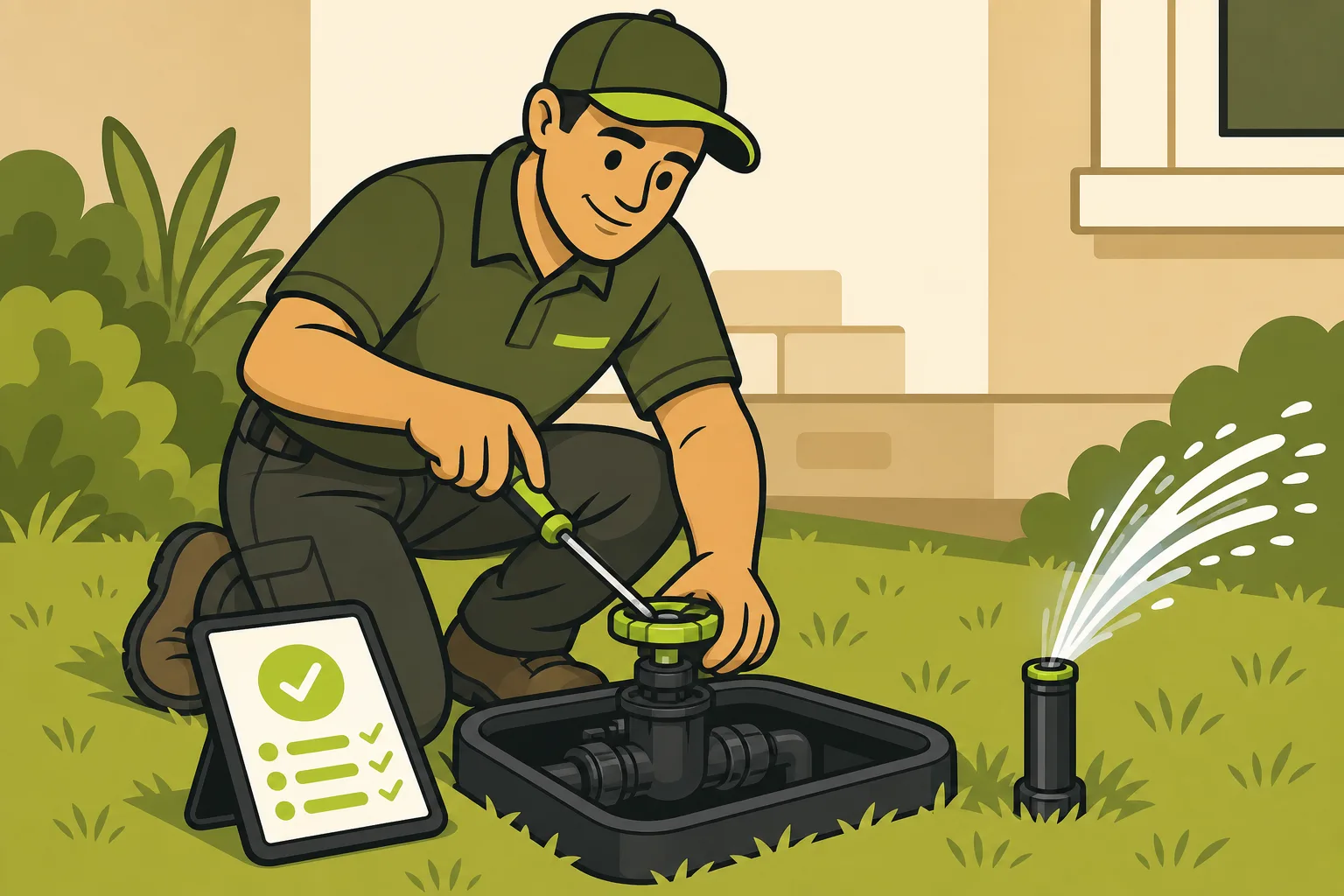
The seven-point startup checklist a pro runs:
-
Backflow preventer inspection and certification. This is the component that protects your household water supply from lawn chemicals, fertilizer, and soil contamination. Most states require annual testing by a state-certified tester — not just a visual check. A licensed irrigator carries the differential pressure gauge required to perform a proper test and provide documentation. Skip this, and you may be out of compliance with your local water authority.
-
Slow pressurization to prevent water hammer. Opening the main valve too quickly creates a pressure surge — called water hammer — that can crack PVC fittings, blow manifold connections, and split lateral lines that survived winter just fine. A trained tech opens the valve one-quarter turn, waits for the system to equalize, then continues in stages. This takes patience, not skill — but most homeowners don't know to do it.
-
Zone-by-zone pressure testing. Each zone runs independently, and pressure problems are zone-specific. A tech checks that each zone holds the target 40–65 PSI range. Under-pressure suggests a blockage, a failed valve, or a leak in the lateral line. Over-pressure wears down heads and seals faster. Neither shows up on a simple visual walkthrough.
-
Head inspection and alignment. Winter ground movement, freeze-thaw cycles, and foot traffic shift sprinkler heads off-alignment. A tech walks every zone while it runs, physically adjusting heads so spray patterns overlap correctly without leaving dry strips or soaking the foundation, sidewalk, or driveway.
-
Leak detection at fittings, valves, and zone connections. Hairline cracks from freeze damage often don't appear until the system is under full operating pressure. A pro knows where to look — around the valve manifold, at elbow fittings, and at the mainline connection — and catches leaks while they're drips rather than after they've washed out a section of lawn.
-
Controller reprogramming for spring run times. Your summer watering schedule — built around peak heat and longer days — is wrong for March and April. Early spring typically needs 50–60% of summer run times. A tech resets the controller, confirms the date and time, and adjusts run times by zone based on plant type and sun exposure.
-
Documentation of anything found. A good tech tells you what they saw and what they recommend — without pressuring you into same-day repairs. You leave with a clear picture of your system's health and a prioritized list if anything needs attention before summer.
GrowLocalSee a finished Irrigation & Sprinkler site — built free, no cardWe build it first. You only pay if you launch it — Starts at $5/mo.See Irrigation & Sprinkler sites we've built
In GrowLocal's analysis of top-performing irrigation and sprinkler company sites, the strongest competitors build dedicated service pages for spring startup and fall blowout — the two recurring visits that drive their annual revenue model.
Pro startup vs. DIY: what's the real difference?
| Professional startup | DIY startup | |
|---|---|---|
| Cost | $75–$150 typical | $0–$75 (time + any parts) |
| Time | 30–60 minutes | 60–120+ minutes |
| Backflow testing | Certified tester, documented | Not possible without gauge + certification |
| Pressure testing | Zone-by-zone with gauge | Visual only |
| Water hammer risk | Eliminated with staged pressurization | Present if unfamiliar with the process |
| Leak detection | Pro knows where to look | Depends on experience |
| Controller programming | Done as part of service | Manual — easy to skip or misconfigure |
| Freeze damage caught | At startup, before it worsens | After it's flooded your yard |
DIY works if your system is simple and your backflow preventer is already certified. The cost of one cracked mainline — common when pressurization is rushed — runs $200–$500 in parts and labor. A failed backflow preventer replacement adds $150–$400 on top. The annual startup fee looks different after those numbers.
When should you schedule your spring sprinkler startup?
The timing rule is straightforward: wait until the ground is frost-free at least 12 inches deep and your area is past its last expected freeze date.
Practically, that means:
- Northern climates (Colorado, Illinois, Michigan, Minnesota): mid-April through early May
- Mid-Atlantic and Midwest (Kansas, Missouri, Virginia): late March through mid-April
- Southern markets (Texas, Georgia, the Carolinas): mid-February through March
The problem isn't waiting too long — it's booking too late. March through May is peak season for licensed irrigation techs. In markets like Denver or Dallas, slots fill weeks in advance. Calling in late April often means a two-week wait, and two weeks of dry early-summer conditions can damage newly established turf.
Book in February — it takes five minutes and costs nothing to hold a slot.
What happens if you skip spring startup?
Nothing catastrophic — immediately. The problems surface weeks into the season.
Missed freeze damage. A hairline crack from January holds through low spring pressure but gives way in June at full PSI — washing out lawn sections and soaking foundation edges. Repair cost: $300–$600+ depending on access and pipe depth.
Backflow contamination risk. If your backflow preventer failed over winter, you won't know until your water authority tests the line or a cross-connection event occurs. Some jurisdictions fine non-compliant backflow devices; others require system shutdown until repaired and certified.
Dry zones from misaligned heads. A head shifted two inches by frost sprays a fence instead of turf. You won't notice until you have an unexplained dead strip — and reseeding costs more than a startup visit.
Wrong controller settings. A summer schedule running in April promotes fungal disease in cool-weather turf. In drought-restriction markets like Central Texas and Colorado's Front Range, unnecessary spring irrigation can also violate local water use rules.
Key takeaway: The annual cost of a professional spring startup — typically $75–$150 — is a fraction of what a single undetected freeze-damage repair costs. In the irrigation industry, the recurring startup-plus-blowout service model exists because the math works: consistent maintenance prevents the $500+ emergency call. The strongest irrigation companies we analyzed make this value case explicit on their seasonal service pages.
How much does spring sprinkler startup cost, and what's included in an annual plan?
Single-visit spring startup: $75–$150 for most residential systems (more for commercial or systems with 12+ zones).
Many irrigation companies offer annual maintenance plans that bundle both recurring visits:
- Spring startup + fall blowout: $250–$450/year depending on zone count and market
- Full plan (startup + mid-season check + blowout): $400–$600/year
The fixed-price model for seasonal services — where a company charges a per-zone rate or a flat fee — is one of the clearest conversion differentiators we've seen across the irrigation companies we analyzed. Homeowners want to know what they'll pay before they call. Companies that publish their seasonal service pricing tend to get more inbound calls from qualified buyers than those that send everything to "call for a quote."
When evaluating an annual plan, ask: Does it include backflow testing documentation? What's the extra charge if heads need replacing during the visit?
How to find a licensed sprinkler company for spring startup
The license matters. In Texas, irrigation contractors must display their Licensed Irrigator (LI) number from TCEQ. Colorado, Virginia, North Carolina, and most other states have equivalent credential requirements. A company that won't tell you their license number is a red flag.
What to check before booking:
- State irrigation license number — ask for it and verify it
- Backflow preventer testing certification (separate from the irrigation license in most states)
- Google reviews from the past 12 months, not just the star average
- Whether the startup visit includes a written summary of any issues found
See the GrowLocal irrigation and sprinkler company directory for local irrigation companies by market, including their services and service area. The GrowLocal local business website hub covers what makes a home-service business trustworthy across 90+ categories.
Frequently Asked Questions About Spring Sprinkler Startup
How much does a professional spring sprinkler startup cost?
Most residential spring startups run $75–$150 depending on zone count and market. Annual plans bundling spring startup and fall blowout typically cost $250–$450. Companies that publish flat per-zone pricing convert more callers than those who hide every price behind a quote form.
Is backflow testing legally required for spring startup?
In most U.S. states, yes. Backflow preventers must be tested annually by a state-certified tester — not just visually inspected. The test requires a differential pressure gauge and produces documentation that some water authorities require on file. A licensed irrigator carries this certification; most homeowners don't.
Can I do my own spring sprinkler startup?
Yes, if your system is simple and your backflow preventer is already certified. The main risk is pressurization speed — opening the valve too fast causes water hammer that cracks PVC fittings and manifolds. If you don't know your system's post-winter condition, one repair call costs more than a professional startup visit.
What happens if I don't do a spring startup at all?
Most homeowners just turn the system on manually. The risk is undetected freeze damage — a hairline crack invisible at low pressure that gives way at full summer PSI, causing flooded yard sections and $300–$600+ in repairs. Missing backflow certification also creates compliance risk in jurisdictions that require annual testing.
When is the best time to schedule spring startup?
Book in February, even if the system won't turn on until April. March through May is peak booking season, and slots fill fast. Most companies hold your date without a deposit.
Do I need a GrowLocal site to book a spring startup?
No — but if you're an irrigation company owner, your spring startup service page is one of the most important pages on your website for the March–May booking window. See what a professional irrigation company website should include — including dedicated seasonal service pages, quote forms, and the trust signals that convert first-time callers into recurring annual maintenance customers.