


Social Media Marketing for Bars and Breweries: What Actually Works
Updated June 2026
Social media marketing for bars and breweries works when you stop "advertising" and start filming the room. The formats that travel are the slow-motion beer pour with the foam cascade, bartender-POV comedy ("the regular whose order I already know"), the storytime behind a beer's name, a recurring taproom character, and current TikTok trends shot in your space. Post 4–6 times a week on Instagram and TikTok, push events on Facebook, and treat the new-beer reveal as your single highest-engagement post. Roughly 75–80% of your feed should be this organic, no-sell content — it's what builds the audience that actually shows up.
This is based on our analysis of how bars and breweries earn attention on social — the content veins that get watched, saved, and shared, not the generic "post consistently and use hashtags" advice you've already heard.
What kind of content actually gets engagement for a brewery?
Sensory, in-group, and human content gets engagement — not promos. A taproom is a "where do we go tonight" destination, so your feed has to feel like a place worth being, not a coupon book. Five organic veins carry this trade. Learn them and you'll never stare at a blank caption box again.
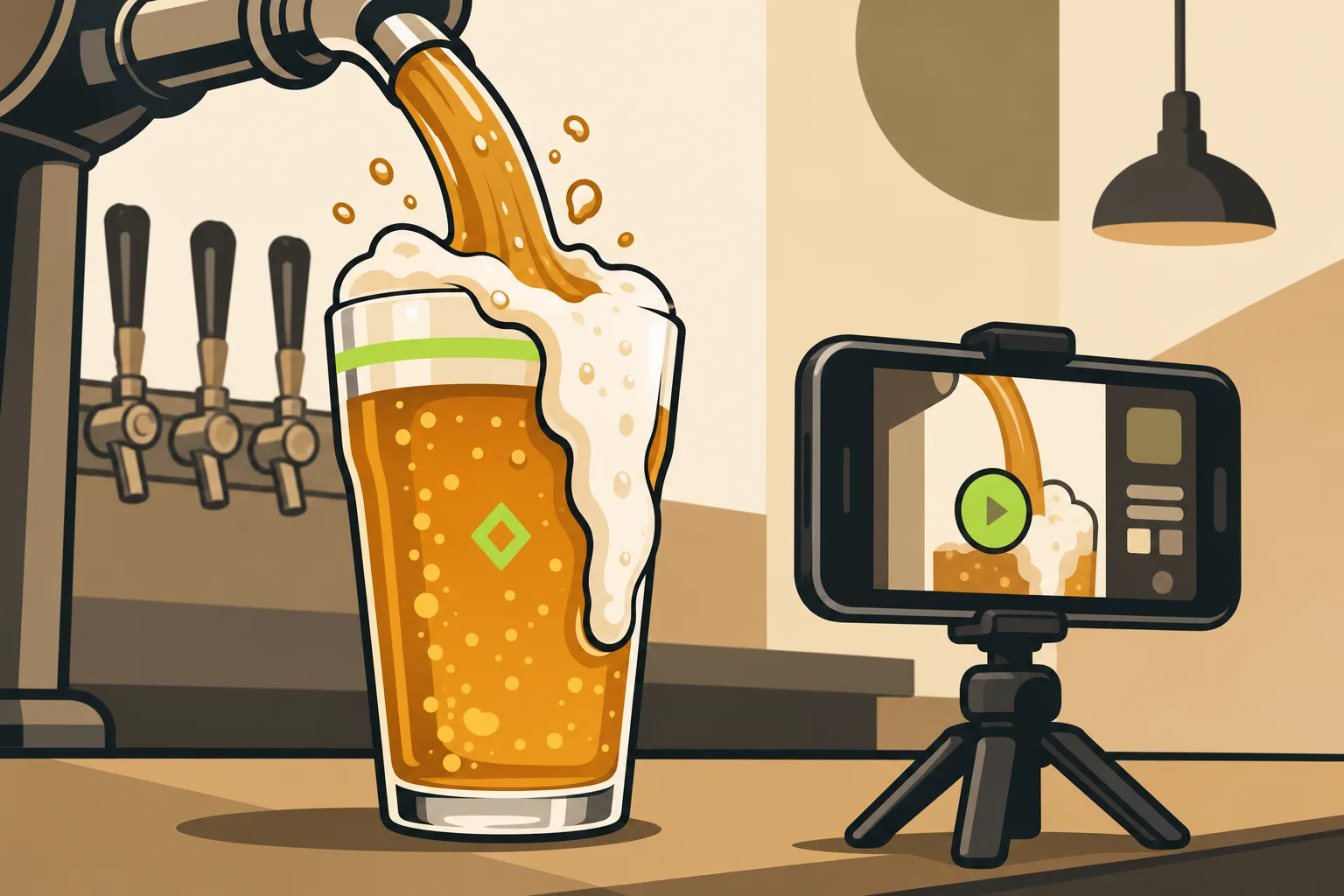
1. The satisfying pour (beer ASMR). This is the hero format. A tight, slow-motion pull of the tap handle, beer hitting the glass at an angle, the foam head settling, condensation beading on a branded glass — no text, no price, "sound on." Brewery accounts run this genre directly; Harpoon Brewery's beer-ASMR Reels are a well-known example, and the canning-line fill and crowler-seal clink work the same way. It exists to be watched, not to sell.
2. Bartender humor (the relatable bit). The #bartender / #barlife niche is enormous and native. "POV: you're a regular and we already know your order." "Things only bartenders understand." "When someone asks 'what's your lightest beer.'" These are lightly-staged 15–30 second skits with your real staff, riding a trending audio, ending on a tag-prompt ("tag the friend whose order you have memorized") instead of a CTA. Shares and comments turn into follows.
3. The beer-name storytime. Every beer has an origin — the garage experiment, the move home, why you named the hazy IPA after your grandfather's street. A warm, documentary founder or brewer talking to camera ("the real reason we named it ___") is the emotional vein. It earns saves and shares because the why beats the how.
4. The recurring character. People come back for a personality. A bartender who guesses your order, the brewer behind every pour, or — reliably — the taproom dog. Recurring framing makes the character recognizable, which builds a para-social reason to return. Dog content spikes engagement on its own.
5. Trend participation. Borrow reach by applying a current TikTok format and audio to taproom life. The #beerposter trend was widely reported at roughly 400 million TikTok views — breweries that jumped in early rode it. The catch: trend audio decays fast, so this slot has to be filled fresh, every week, while the sound is still hot.
Key takeaway: The new-beer reveal is the single highest-engagement organic format for breweries — but it only lands inside a feed already carrying pour-ASMR, bartender humor, and customer reposts. The veins feed each other; one promo a week in a wall of promos converts no one.
How often should a bar or brewery post — and on what?
Post 4–6 times a week, with daily Stories, treating it as a near-daily 365 commitment. Freshness is the recurring reason people follow a taproom — a stale tap list is worse than no tap list. A realistic weekly rhythm:
- A recurring UGC series — repost a great customer photo every week (the Untappd-style #FeatureFriday model). Highest reach, lowest effort.
- The current tap list or a new-release reveal.
- One event reminder (trivia, live music, food truck).
- One or two organic Reels — a pour-ASMR clip and a bartender bit.
- Daily Stories for tap updates, the food truck schedule, and "open now" nudges.
Across our proprietary local-business website research, Untappd stands out as the one category-specific platform worth a dedicated link — the bar and brewery sites we analyzed pair a standard social-icon footer with an Untappd follow button, not just Instagram and Facebook.
Platform mix matters as much as cadence:
| Platform | Role | What lives here |
|---|---|---|
| Primary | Pour ASMR, can-art reveals, carousels, the aesthetic feed | |
| TikTok | Primary | Bartender humor, trends, short vertical Reels for reach |
| Events utility | Trivia, live music, releases via the Events feature; older local regulars | |
| Google Business | Discovery | "Where do we go tonight" searches — beginner-friendly tap-wall posts |
LinkedIn and Pinterest are low-value for this trade. Don't waste cycles there.
What's the right content mix across a month?
Keep it roughly three-quarters organic, with promos as a small, periodic spike. A healthy month looks about like this: new-beer reveal and tap list around 20%, pour/canning ASMR ~15%, bartender humor ~15%, behind-the-scenes brewing ~10%, customer reposts ~10%, events ~10%, character and beer-name storytime ~10%, and only the remaining ~10% as real promotion — limited-drop urgency, mug-club signups, private-event booking.
Two rules keep this trade out of trouble. First, real photography only — this category tolerates zero stock and zero AI-generated "beer" imagery. Across our proprietary local-business website research, food and drink categories show 100% real photography with zero stock detected across analyzed competitor sets — the same standard your feed is judged against. Second, alcohol compliance is non-negotiable: never target or appeal to under-21 audiences, never imply over-consumption or "get wasted" framing, age-gate where the platform requires it, and keep beer prices out of feed content (this category hides pricing — across our research, 92% of local business websites hide pricing entirely, and bars sit at the strict end of that).
How does social tie back to my website and getting people in the door?
Social earns attention; your site and Google profile convert it. The pour video stops the scroll, but the person who decides to come tonight then checks your hours, your tap list, and whether you're dog-friendly. If that lives on a slow, stale, or stock-photo site, you lose them at the last step. Real photography, a current tap list, and an obvious "visit us" path are what turn a save into a seat — see our bar and brewery website breakdown for the page structure that actually converts taproom traffic.
The seasonal calendar is your content engine, too. Oktoberfest is the biggest window and now ships as early as June due to seasonal creep, so anticipation content starts months ahead. Summer patio season, fall pumpkin and Marzen, winter barrel-aged releases, game days, and your anniversary release all give you a built-in reason to post. We see the same "freshness drives return visits" pattern in other hospitality trades — it shows up across our website research hub for food and drink categories. The same organic-first, reels-over-ads approach carries into social media marketing for restaurants, the closest adjacent trade sharing your hospitality crowd.
This is a lot of work every single week. Is there a shortcut?
Yes — done-for-you social is the realistic shortcut, because the hard part isn't ideas, it's the relentless weekly grind. Four to six on-brand posts a week, fresh trend audio before it decays, customer reposts with permission and credit, a recurring character, compliance on every caption — that's a part-time job on top of running a taproom. Most owners start strong in January and go quiet by March.
GrowLocal builds and hosts your bar or brewery site and writes your social posts for you, grounded in this exact playbook — we already know your trade's veins and your brand. You handle the pour; we handle the feed and the site it points back to. Beer ASMR, the bartender bit, the new-release reveal, the #FeatureFriday repost, the seasonal beat — drafted in your voice, on a real cadence, with compliance and real-photo discipline built in.
It's a soft ask, not a hard sell: if the every-week grind is the thing standing between you and a feed that fills tables, start with a professional bar and brewery website and see what done-for-you looks like for a taproom. And if you're still mapping out the site itself, our guide on what a brewery website should include covers the pages that turn followers into walk-ins.
Frequently Asked Questions
What should a brewery post on Instagram?
Lead with the slow-motion beer pour (ASMR), the new-release reveal with can art, and reposts of customer taproom photos. Instagram rewards aesthetic, sensory content, so your pour shots, patio lifestyle photos, and tap-wall carousels belong here. Keep promos to a small slice and let the organic veins carry the feed.
How often should a bar or brewery post on social media?
Post 4–6 times a week with daily Stories — taprooms are "where do we go tonight" destinations, so freshness is the reason people keep following. A stale tap list is worse than none. A weekly UGC repost series, the current tap list, one event reminder, and a couple of organic Reels is a sustainable rhythm.
Is TikTok worth it for a brewery?
Yes — TikTok is a primary platform for this trade, especially for bartender humor and trend participation. The #bartender and #barlife niches are huge, and borrowed-reach trends like the #beerposter format (widely reported at roughly 400 million views) can put a small taproom in front of a national audience. Shoot natively in your real space with your real staff.
Do I need to hide beer prices in my social posts?
Yes — bars and breweries hide pricing as a category norm, and feed content should follow suit. Across our proprietary local-business website research, 92% of local business websites hide pricing entirely, and this trade sits at the strict end. The one acceptable number is mug-club or loyalty membership pricing in a clear promo post.
Can I use stock photos if I don't have good footage?
No — this category tolerates zero stock and zero AI-generated beer imagery. Across our research, food and drink categories show 100% real photography with no stock detected. Build a B-roll bank instead: the best posts are often off-the-cuff pours, brew-day moments, and crowded-patio shots filmed on a phone.
Should I just hire someone to do this for me?
If the weekly grind is what's stopping you, done-for-you social is the practical answer — the formats are knowable, but the relentless cadence is the real cost. GrowLocal writes your posts grounded in this trade's playbook and builds the site they point to, so the only thing you supply is the footage from your own taproom.