


Social Media Marketing for Chiropractors: What Actually Works
Updated June 2026
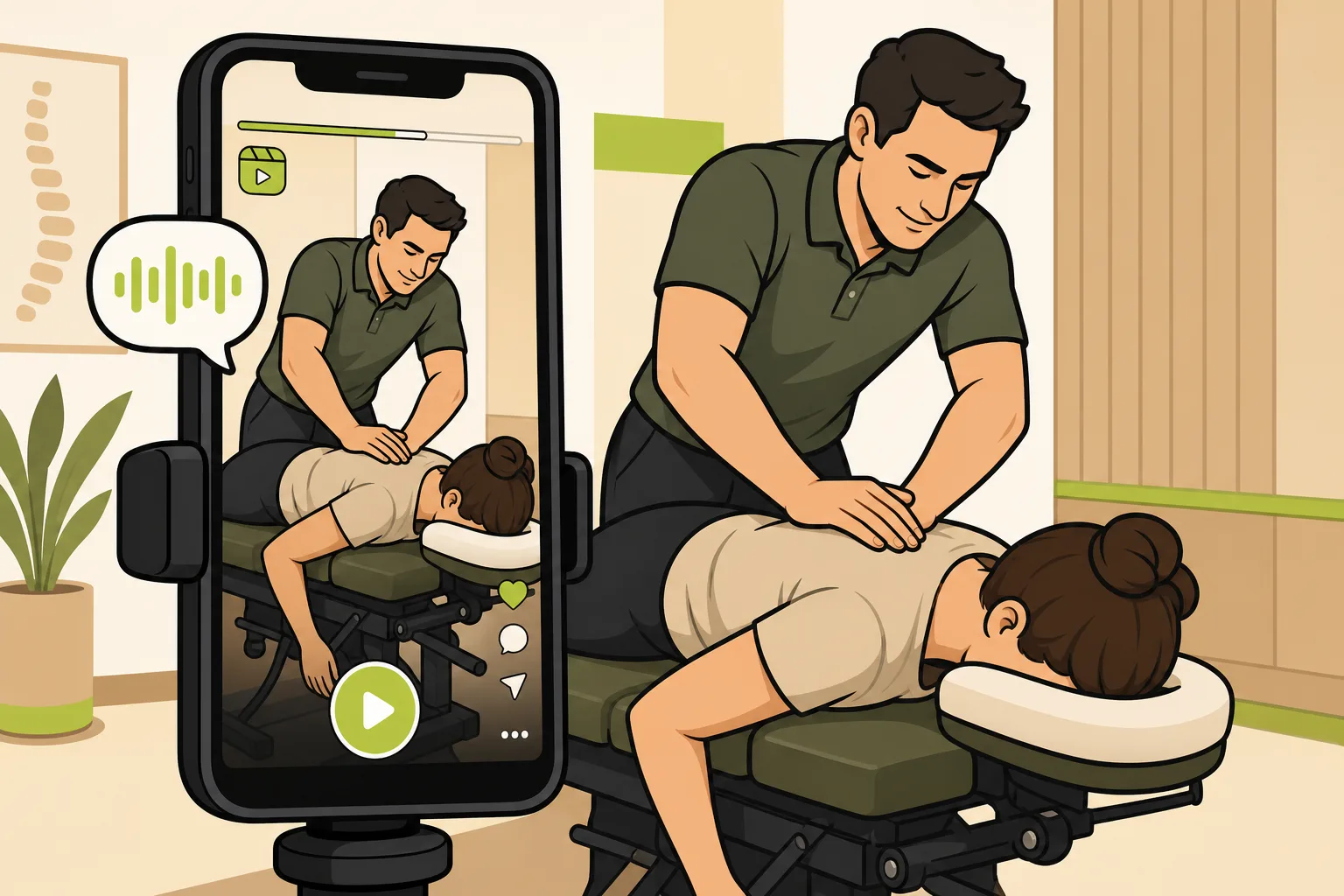
Social media marketing for chiropractors works best when the adjustment itself becomes the content. The audible "crack," the patient's exhale of relief, the slow-motion setup — that satisfying/ASMR genre is the single biggest reach engine in this category, and it lives on TikTok and Instagram Reels. Relatable "slept wrong again" humor and grounded mythbust clips ("no, that crack isn't your bones") build the follow. Promotion — the new-patient special — is the minority of a healthy calendar, not the whole thing.
Most chiropractic accounts do the opposite: nothing but offers and stock spine diagrams, then they wonder why nobody books. Below are the specific content veins that win for this trade, the realistic cadence, and an honest look at what it takes to run weekly.
What kind of chiropractor content actually gets views?
The reach hero is the satisfying adjustment clip — real audio, real relief. This is a massive standalone genre on TikTok and Reels (hashtags like #BackCracks, #adjustment, and #satisfying carry it to people who don't follow you yet). It works because the payoff is visceral and needs no explanation.
You don't need a creative team to film it. The repeatable formats:
- The crack ASMR reel. Open tight on the patient settling onto the table, text "sound on." Build through the slow setup, then deliver the isolated adjustment audio with no music over it. Land on the patient's exhale. No booking ask — caption it "the exhale says it all." This is the format that travels.
- The "activator" tap and the relief exhale. Same vein, lower stakes: the gentle instrument-assisted adjustment, or just the moment shoulders drop after a session.
- In-session range-of-motion reveal. Show the neck turn before, then the same turn after the adjustment that visit. Frame it as one session's change, never as a cure.
One hard rule: real clinic footage with real audio beats stock every time, and any patient on camera needs explicit on-camera consent. The trending AI "chiropractor gone wrong" skits are off-brand for a real practice — skip them.
How do I make chiropractor posts people relate to and follow?
Humor is the follow engine, and the most reliable vein is the everyday cause of back pain dramatized. People don't follow a clinic for offers — 38% of people follow brands for entertaining content (a widely cited social-marketing figure). Give them the bit.
The proven setups, pulled straight from what works in this trade:
- "POV: you slept wrong again." Exaggerate the morning-after reaction, dramatize the villain (the bad pillow, the gaming chair, picking up the kid wrong), then cut to the walk-of-shame into the clinic and the doctor's knowing look.
- "Me explaining to my chiropractor what I did this time." Self-deprecating, instantly taggable.
- "Desk job by 3pm starter pack" / "my spine has filed a formal complaint." A clean branded meme graphic with one tag-bait line in the caption ("tag your worst-posture friend") drives shares with almost no production cost.
Personality over polish here. A lo-fi phone clip of the doctor or front desk acting out the bit outperforms a glossy ad, because relatability is what earns the follow.
Should chiropractors post educational content?
Yes — mythbust-as-entertainment is the authority and "saves" engine. A talking-head reel that busts a common myth in the first three seconds earns trust without selling anything. The hooks that consistently land:
- "No, that crack is NOT your bones." Explain cavitation — gas bubbles releasing, not bone-on-bone — with personality, one practical takeaway, then a question to the comments.
- "Do you really have to come forever? Let's be honest." Answering the objection patients are too polite to ask builds enormous trust.
- "Is cracking your own neck actually bad?" Pure curiosity-bait that doubles as a save.
Carousels are the other high-save format: "3 desk stretches to undo your workday," "sleeping positions ranked by your spine," one tip per slide, ending on "save this for tomorrow morning." For organic reach, "save this" beats "book now" — saves and shares signal value to the algorithm in a way an offer never will.
Compliance bounds the fun, because chiropractic is a healthcare category. No cure claims, no "fixes all back pain," no guaranteed outcomes — the FTC penalizes unsubstantiated health claims, and a disclaimer does not rescue a misleading one. Explain how it works; never promise what it does.
What about emotional and behind-the-scenes content?
The storytime reel is the emotional vein, and it out-shares almost everything except the crack. The structure: open on the before state and the human stakes ("she walked in unable to turn her head"), show the journey with consent, then land on the milestone — back to the hike, the gym, picking up the grandkids. Frame it as that one person's story, with permission, never as a typical or guaranteed result.
Then there's the recurring-character vein, which is underrated for a small practice. Give the audience a reason to come back:
- The doctor's signature adjustment as a running series ("Dr. ___'s signature move, part 4").
- The regular patient who reacts loudest ("our loudest cracker returns").
- The front desk, the office dog, the morning-prep ritual.
These build a para-social loop — people tune back in for the characters, which humanizes the doctor and earns trust without a single sales line. Behind-the-scenes Stories (clinic prep, team intros, a Q&A sticker) do the same job lower-effort.
Key takeaway: The adjustment crack is your reach engine and relatable humor is your follow engine — together they should be roughly 80–85% of your calendar. The new-patient special is the periodic minority, not the main act.
How often should a chiropractor post, and on which platforms?
Post 3–5 times per week on one primary platform; consistency beats volume. Accounts that post 3–5x weekly tend to see roughly double the engagement of sporadic posters, and short demonstration video outperforms static images by a wide margin. A realistic week looks like this:
| Slot | Content | Vein |
|---|---|---|
| 1–2 video reels | Crack/ASMR or "slept wrong" humor | Reach + follow |
| 1 reel/carousel | Mythbust or desk-stretch tips | Authority + saves |
| 1 reel/Story | Storytime, recurring character, or BTS | Trust + para-social |
| Every 1–2 weeks | New-patient special or review milestone | Conversion |
Platform mix matters because the audiences split. TikTok and Instagram Reels carry the organic reach — the ASMR and humor clips reach non-followers there. Facebook is the booking hub, because the 35-and-up demographic most likely to pay for chiropractic care lives there. Use Google Business Profile posts for local-search proof (community events, free posture screenings), and YouTube as the depth layer for "what to expect / does it hurt" explainers. Most practices should pick one or two primary platforms and post consistently rather than spread thin.
Tie campaigns to the calendar, too: National Chiropractic Health Month (October) is the biggest hook, back-to-school backpack posture runs August–September, and New Year resets land in January. Build those assets four to six weeks ahead.
Where does your website fit in all this?
Social earns the attention; your website converts it. Every relatable clip and crack reel sends people somewhere — and if your link-in-bio lands on a slow, generic, or stock-photo site, the booking intent leaks out. This matters more than most owners think: across our proprietary local-business website research, only a small fraction of the chiropractor competitors we analyzed displayed a concrete review score above the fold, which means a fast site that shows "4.9 stars" and a real new-patient offer is an instant differentiator. See our full professional chiropractor website breakdown for what the strongest practices put on the page.
The same research shows real photography is the visible quality line in this category — the doctor mid-adjustment, the real team, real clinic footage. That's the exact footage your ASMR and storytime reels already produce, so your content engine and your site can feed each other. This visual-proof pattern isn't unique to chiropractic — we see it just as strongly in personal trainer social media, another hands-on service where demonstrating the work builds trust faster than any offer.
This is a lot of work every week. Is there an easier way?
Honestly — yes, this is a lot. Filming, captioning, editing, scripting mythbusts, planning a seasonal calendar, and staying compliant with health-claim rules is a part-time job on top of adjusting patients all day. That's the real reason most chiropractic accounts stall after three weeks.
This is where GrowLocal's done-for-you social comes in. We already build and host your site, so we know your trade, your brand, your city, and your offer — and we write your social posts grounded in exactly the veins above: the satisfying-adjustment angle, the relatable posture humor, the grounded mythbust education, the seasonal hooks. You approve; we post. No blank calendar, no guessing what works for chiropractors.
If you want the site and the social handled together, start with our chiropractor site and social breakdown, or see how we approach local websites across every trade. The content that builds a chiropractic following is specific and repeatable — and you don't have to run it alone.
Common Questions About Social Media Marketing for Chiropractors
What is the best social media platform for chiropractors?
TikTok and Instagram Reels are best for organic reach, because short adjustment and educational clips reach non-followers through the For You and Reels feeds. Facebook is the better booking hub, since the 35-and-up patients most likely to pay for care are most active there. Most practices should focus on one or two platforms and post consistently.
What should a chiropractor post on social media?
Lead with the satisfying-adjustment "crack" reel for reach, relatable "slept wrong" or "desk posture" humor for follows, and grounded mythbust clips like "no, that crack isn't your bones" for authority. Add patient storytime arcs (with consent) and behind-the-scenes content for trust. Keep promotional new-patient offers to a periodic minority of the calendar.
How often should a chiropractor post on social media?
Aim for 3–5 posts per week on your primary platform. Consistency outperforms volume — accounts posting 3–5 times weekly tend to see roughly double the engagement of sporadic posters. A practical week is one or two video reels, one educational post, one personality or storytime post, and a promotion every one to two weeks.
Are chiropractic ASMR adjustment videos allowed?
Yes, with consent. Any patient appearing or heard on camera must give explicit on-camera consent, and content should stay professional rather than chasing shock-value "extreme" clips. Avoid AI "chiropractor gone wrong" skits — they're off-brand for a real practice and can undermine trust.
Can chiropractors make claims about results on social media?
No — avoid cure, guaranteed-outcome, or "fixes all back pain" claims, since the FTC penalizes unsubstantiated health claims and a disclaimer does not fix a misleading one. Frame results as one patient's story with permission, disclose any compensation, and present education as "how it works" rather than a promise. Some states also restrict provider testimonials in advertising.
Do I need a website if I'm already active on social media?
Yes. Social earns attention but converts poorly on its own — every clip needs somewhere to send booking intent. Across our proprietary local-business website research, only a small fraction of the chiropractor competitors we analyzed showed a concrete review score above the fold, so a fast site with a real rating and a clear new-patient offer turns followers into appointments.
Can I get help running chiropractor social media instead of doing it myself?
Yes. GrowLocal offers done-for-you social as part of building and hosting your site, so the posts are grounded in your trade, brand, city, and offer. You approve the content; we write and schedule it using the proven chiropractic content veins, including the seasonal calendar.