


Updated June 2026
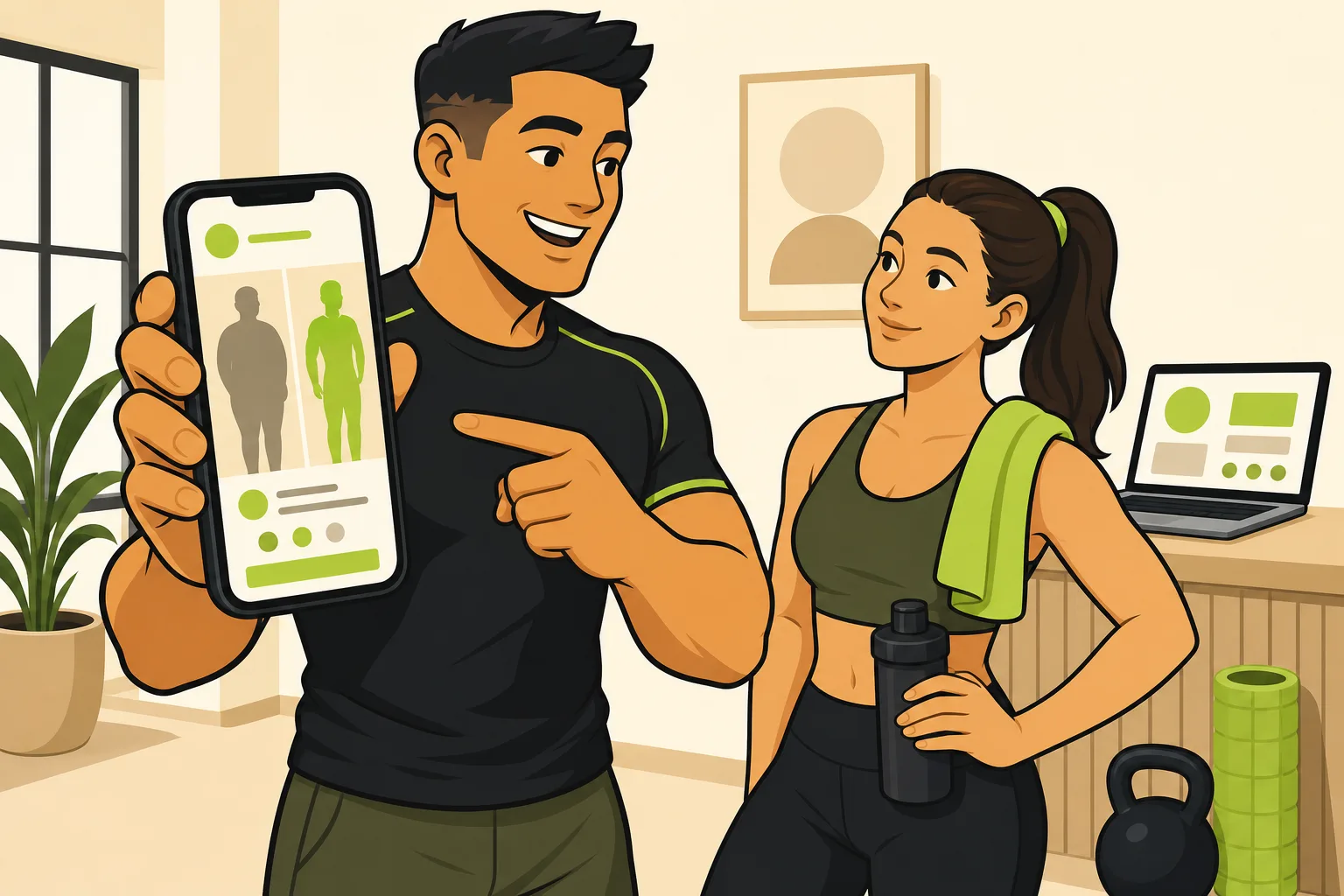
Social media marketing for personal trainers works when three things run together: transformation content that proves your method, a consistent posting schedule across Instagram and TikTok, and a website that catches the follower who is finally ready to book. Post alone and you fill someone else's algorithm. Add the website and you fill your own roster.
Based on GrowLocal's proprietary research into top-ranking local business websites.
Most articles on this topic stop at "post consistently." This one starts where they end — at the moment a follower decides they want to hire a trainer and needs somewhere to land.
Does social media actually get personal trainers new clients?
Yes — but only if there is somewhere to send the follower who is ready to act. Instagram and TikTok generate awareness and trust. The conversion happens on a page they can bookmark, share, and return to when the timing is right.
Trainers who run social without a website lose leads at exactly the moment those leads are warmest. A prospect scrolling at midnight who sees your client's before-and-after has one of two paths: they DM you (and wait), or they click a link in your bio and fill in a contact form. The second path converts at a far higher rate — and it works while you sleep.
For personal training websites that convert social traffic, the critical elements are a clear free-intro offer, real client transformation photos, and a visible contact form above the fold.
What should personal trainers post on Instagram and TikTok?
Content that converts falls into three buckets: proof, education, and personality. Most trainers post only one of the three, which limits reach and erodes trust.
Proof content (before/after transformations, client milestone clips, testimonial quotes with a name and timeframe) demonstrates that your method works. The strongest personal training sites analyzed across our research lead with named, attributed results — "At 44, I'm in the best shape of my life" — not generic "I love my trainer" praise.
Educational content (form correction clips, common workout mistakes, nutrition quick-tips) builds the perception that you know more than the person watching. It also gets shared, which extends reach to people who have never heard of you.
Personality content (day-in-the-life, your own training, behind-the-scenes of a client session with permission) builds the trust that tips a warm follower into a paying client. Personal training is a high-consideration purchase — prospects are buying access to you, not just a program.
The three post types that consistently drive inquiries
- Short-form transformation video (15–30 seconds, before-and-after side-by-side, client speaking to camera at the end)
- "Common mistake" Reel or TikTok (corrects a form error, names the injury risk, positions you as expert)
- Client win story (static carousel on Instagram: photo, the starting point, the result, a quote, a CTA to your bio link)
How often do personal trainers need to post?
Three to five times per week on Instagram, with daily Stories, produces steady follower growth without content burnout for most independent trainers. TikTok rewards higher frequency — one to three short videos per day — but one well-made video beats five rushed ones.
Every hour filming, editing, and scheduling is an hour not spent coaching. Batch production solves the time problem: film three to five clips in one session, edit in the same afternoon, and schedule them across the week. That keeps a week's content under three hours. The ongoing friction is the captions, hashtags, resizes, and the need to repeat it every week without fail.
Key takeaway: Across GrowLocal's proprietary local-business website research, 100% of top-ranked fitness competitor sites use exclusively real photography — zero stock imagery detected across the competitive set (N=~450 sites across fitness and transformation categories). For personal trainers, authentic client visuals are not optional polish. They are the product.
Which platforms matter most for personal trainers in 2026?
| Platform | Best use | Content type | Time investment |
|---|---|---|---|
| Brand trust, premium clients | Reels, carousels, Stories | Medium — 3–5x/week | |
| TikTok | Discovery, younger demographics | Short-form video | High — daily preferred |
| Referrals, local community groups | Posts, events, group activity | Low — repurpose from IG | |
| YouTube | Long-form authority, SEO | Tutorial videos | High — 1–2x/week |
| Corporate wellness, B2B leads | Articles, thought leadership | Low-medium |
Most independent trainers should anchor on Instagram and cross-post to TikTok and Facebook. YouTube is worth adding once you have a posting rhythm and a clear content angle. Spreading across all five platforms before mastering one produces mediocre content everywhere.
Across GrowLocal's proprietary research covering local business websites, Instagram feed integration appears most heavily in beauty and fitness categories — making it the one platform where a trainer's website and social presence actively reinforce each other through embedded content.
What makes followers convert into paying clients?
The gap between a follower and a paying client is almost always friction — either they do not know how to reach you, or the next step feels too big. Social media marketing for personal trainers converts best when the path from content to inquiry is one tap.
That path looks like this:
- Follower sees a transformation post or form-tip Reel
- They visit your profile, read your bio, and click the link
- They land on a page with a clear free-intro offer, real client results, and a contact form
- They fill it in — often late at night, often on a phone
The drop-off happens at step 3. A dead link, a booking platform that requires account creation, or a site that just lists services without a visible CTA loses the lead. The free-intro offer — the standard conversion mechanism across every personal training competitor site we analyzed — needs to be the first thing a visitor sees, not something buried in a "Pricing" page.
Across the strongest personal training sites in our research, benefit-led copy significantly outperforms identity-led copy for follower conversion. While most trainer sites rely on "[City]'s #1 Personal Training Studio" headlines, the sites that convert social traffic most effectively lead with what the client gets: "Get in the best shape of your life and reclaim your confidence." That framing is a wide-open differentiator across the category — most competitors have not made the shift.
See personal training websites built for social conversion and our full cross-category research at local business websites for every trade.
How does AI help personal trainers with social media?
AI writes first drafts of posts, captions, and hashtag sets in seconds. The trainer adds their voice, a real client result, or a specific story — and the post is done. For trainers who know what to say but dread the blank caption box, that friction disappears.
AI drafting works best when it's grounded in your actual brand — your services, your niche, your transformation promise — plus category-level fitness research, then scheduled to Instagram, Facebook, TikTok, Pinterest, YouTube, LinkedIn, X, Threads, and Bluesky. You set the tone once; the tool maintains it across nine channels on a schedule you control. GrowLocal's own AI social layer works this way, but it's a separate back-office product that isn't on sale to the public yet.
GrowLocal builds and hosts the website: hosting starts at $5/month, it's $0 to build and preview, and your exact rate depends mostly on the working features in your finished site (published band $5–$14/month). The AI social publishing layer is a separate back-office product that isn't publicly available yet, so budget a standalone scheduling tool today and ask us where ours stands. For the full cost breakdown, social media management pricing in 2026 covers the landscape. For the posting cadence itself, social media posting schedule for local business lays out the week-by-week framework.
Why personal trainers need the website alongside social
Social media without a website is awareness without a destination. A website without social is a page no one finds. The trainer who fills their roster runs both: consistent posts that build trust and extend reach, plus a fast mobile-optimized site that catches that trust and converts it.
GrowLocal builds the website half today — a fast, mobile site that catches the trust your posts build, with hosting from $5/month — while automated social publishing is a separate product that isn't publicly available yet. For the honest comparison between AI post generators and done-for-you social services, AI social media post generator vs. done-for-you covers what each actually delivers.
Frequently Asked Questions
Does social media marketing actually work for personal trainers?
Yes — when it is paired with a website that captures the lead. Social platforms build awareness and trust; the website converts that trust into a contact form submission. Trainers who run social without a conversion destination lose their warmest prospects at the exact moment those prospects are ready to act.
How many posts per week do personal trainers need?
Three to five Instagram posts per week, plus daily Stories, is a realistic cadence for most independent trainers. TikTok rewards higher frequency — one to three short videos per day — but quality beats volume. Batching a full week of content in a single filming session keeps total production time under three hours.
What content converts followers into paying training clients?
Before-and-after transformation posts with a client name, age, and timeframe drive the highest inquiry rates. Form-correction Reels build expert credibility and get shared widely. Personality content — behind-the-scenes coaching clips, your own training — builds the personal trust that tips a warm follower into booking a free intro session. Across GrowLocal's proprietary local-business website research, 100% of top-ranked fitness competitor sites use exclusively real photography — zero stock detected (N=~450 sites). Authentic client visuals are the product, not decoration.
Do I need a website if I already have a strong Instagram following?
Yes. A DM inbox does not replace a landing page with a contact form, named client testimonials, and a visible free-intro offer. Followers convert at a much higher rate when they can explore your services at their own pace without waiting for a reply. The website is what turns an interested follower into a booked lead.
How much does social media marketing for personal trainers cost?
Costs range from your own time (free in cash, expensive in hours) to $30–$100+ per month for tools or managed services. On the website side, GrowLocal hosting starts at $5/month with $0 to build and preview — less than the cost of a single session — and the exact rate depends mostly on the working features in your finished site (published band $5–$14/month). Our AI social publishing is a separate back-office product that isn't publicly available yet.
Can AI write my social media posts for a personal training business?
Yes. AI drafting tools write from your brand voice plus fitness category research, then schedule and publish to Instagram, Facebook, TikTok, Pinterest, YouTube, LinkedIn, X, Threads, and Bluesky automatically. You supply the real client results and authentic voice; the tool handles the production work and keeps the schedule running. GrowLocal's own version is a separate back-office product that isn't on sale to the public yet, so pick a standalone tool for now.